
Nicea Conference

A summary of the session
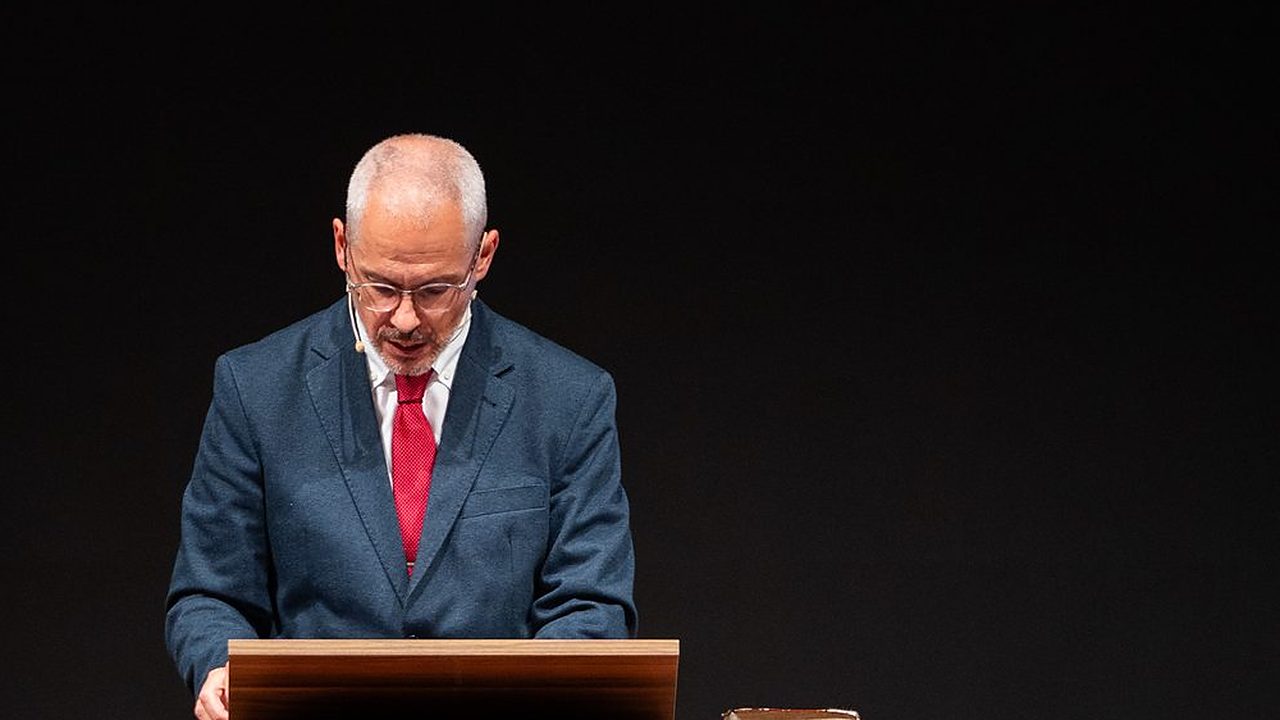
Tiago Oliveira takes up the Creed's confession that Christ was made man. This breakout session connects the incarnation to the worship, practice, and endurance of an ordinary local church.
Transcript
Tiago Oliveira, “Christ incarnate and the life of the church,” breakout session, Nicea Conference 2025, Istanbul.
Introduction
Grace and peace, brothers and sisters. My name is Tiago Oliveira. I’m married to Marta. We have three boys. I’m the pastor of the First Baptist Church of Lisbon. I am the president of Martin Bucer Seminary, Portugal. And I want to start by expressing my gratitude for the privilege of being with you today. Yesterday, I was amazed.
I think that Scott Logsdon was also surprised to see how many nationalities were here represented. Isn’t that an amazing thing? But I also feel privileged to be part of such a diverse group of speakers representing five continents. Just think about what it means and symbolically means for God’s universal plan of salvation and for the fact that he’s fulfilling his promises and that he’s fulfilling his plan of salvation among all nations and I think that we should recognize that and we should thank God for that.
So the title of this session is Christ incarnate in the life of the church. So let me put this a little bit in context in terms of our conference so that it makes sense logically. So this morning we heard about the person of the Son of God in his two natures. So we heard first Michael Reeves speaking on the divinity of Christ and then Kevin DeYoung on the humanity of Christ. So the two natures of the Son of God.
Yesterday, Eugene Low was tasked with applying the divinity of Christ to the life of the church. So, we had a presentation according to the Nicene Creed according to the Scriptures about the divinity of Christ and then Eugene Low applied it to the life of the church. And my task now I will seek to apply the humanity of Christ to the life of the church. Let me start so that we are situated.
The creed on the humanity of the Son
Let me start by quoting the creed of Nicea. So this is 325 concerning the humanity of the Son. So we affirm this and in one Lord Jesus Christ and then it makes affirmations concerning his divinity. And then it says, “Who for us men and for our salvation came down and was incarnate and was made man. He suffered and the third day he rose again, ascended into heaven. From then he shall come to judge the quick and the dead.” Now listen to the language of the Nicene Creed. Now we’re talking about 381, which puts it this way. It’s a little bit longer, but it’s good for us to be reminded of what we’re looking at and thinking about. It says, “And in one Lord Jesus Christ, who for us men and for our salvation came down from heaven and was incarnate by the Holy Spirit of the Virgin Mary, and was made man, and was cru crucified also for us under Pontius Pilate. He suffered and was buried. And the third day he rose again according to the Scriptures and ascended into heaven in sus on the right hand of the Father. And he shall come again with glory to judge both the quick and the dead whose kingdom shall have no end.
And now allow me even to mention just the language. I’m not going to read it now, but just the language. Several years after of the Chalcedonian creed. This is already 451. Just for our reflection as we think about Christ’s humanity, it says, “One and the same God, our Lord Jesus Christ, perfect in manhood, truly man of a reasonable soul and body, and co-substantial with us according to the manhood in all things like unto us without sin.
So let me ask you, do you believe in the full humanity of Christ? Do you believe in the full humanity of Christ? Do you believe that the Son is truly man in all things like us except sin?
Listen to the warning that we read in the first letter of John 4:es 2 and 3. By this you know the Spirit of God. So by this you know the Spirit of God.
Every spirit that confesses that Jesus Christ has come in the flesh is from God. And every spirit that does not confess Jesus the man is not from God. This is the Spirit of the antichrist which you heard was coming and now is in the world already. [1 John 4:2–3]
Let me say this that both in my pastoral and teaching experience I have found many people many Christians who do not truly believe in the humanity of Christ. You might be surprised but in my Christology class students usually struggle more with the teaching on the humanity of Christ than on the divinity of Christ.
This means that while we should still emphasize the divinity of the Son, brothers and sisters, it cannot be at the expense of the humanity of the Son. So this is one of the most beautiful things about the creed of Nicea is the fact that although the main threat was against the Son’s divinity, they knew that we cannot talk about the Son without affirming both his divinity and humanity because he is both. We can and should distinguish his divine nature and human nature. They should not be confused. They cannot be confused. But we should never separate them. We should never separate the two natures of the Son. So in this session, I will make six points of application regarding the necessity of Christ’s humanity for the life of the church. So just think about the fact that I’m seeking to apply what you heard from brother Kevin DeYoung.
Why the incarnation matters for the church
And so in since this is a breakout session and more applicable in nature, I thought it would be more beneficial to share my personal reflection with you. Of course that I prepared this session for this conference, but this ideas are just part of my own reflection in the last few years drawing on personal pastoral and teaching experience that I hope and I’m convinced that are grounded in Scripture. So I hope that these affirmations and simple affirmations might lead you to reflect on the humanity of Christ and its necessity for the Christian life. So point number one, the incarnation is the foundation for our knowledge of God.
The foundation for our knowledge of God
The incarnation is the foundation for our knowledge of God. So the incarnation of God is God’s ultimate act of self-revelation. You see, the invisible God becomes visible and knowable in the person of Christ, the God man. As we read in John 1:18, no one has ever seen God, the only God who is at the Father’s side, he has made him known. Or think about the famous opening words of the letter to the Hebrews. Long ago at many times and in many ways, God spoke to our fathers by the prophets. But in these last days, he has spoken to us by his Son whom he appointed as the heir of all things through whom also he created the world.
He is the radiance of the glory of God and the exact imprint of his nature. [Hebrews 1:3]
So remember God spoke in the past by the prophets but the prophets were not enough. In the past God spoke in many ways in many times but God’s complete revelation was made by the Son in these last days once and for all.
So think of the incarnation as the pinnacle of God’s revelation of himself. It is God made visible. And remember that the Son did not just teach us about God. Remember that the Son incarnate is himself the object of our faith.
We do not just know about God through him but we know God in the person of Christ incarnate. You see, he is the revelation, not just what he said, but he is in himself. It is in Christ incarnate that we see the law and the gospel fulfilled, the blessing and the curse, death and life.
In Christ, we have both the priest and the sacrifice, the lion and the lamb. The Son incarnate is the perfect revelation of God’s character without any tension or contradiction. We see his justice and mercy, his wrath and love, a God who is both just and justifier without any compromise on any of his attributes in a perfect way.
So the church must preach the Son incarnate, Christ in him crucified because knowing the Son incarnate is knowing God as we read in Colossians 2:9. For in him the whole fullness of deity dwells bodily. Number two, the incarnation is necessary for our salvation. The incarnation is necessary for our salvation. So the creed of Nicea puts it this way. Who for us men and for our salvation came down and was incarnate and was made man.
The Son that was according to the same creed, light of light, very God of very God, being one substance with the Father, became man in order to save us. We already heard about this today in the morning. So brothers and sisters, this is the wonder of the incarnation that the Son of God who is God eternal with the Father and the Holy Spirit has become a man. He did not cease to be God, but he became a man. To his divine nature, he added a human nature.
Only a man could save us
Brothers and sisters, God did not become an angel to save angels, but became a man to save humanity. Listen to the words we read in the letter to the Hebrews, chapter 2, 17. Therefore, he had to be made like his brothers in every respect so that he might become a merciful and faithful high priest in the service of God to make propitiation for the sins of the people. You see what’s being argued here? Notice the purpose. You already heard it this morning. So that in order for the Son to be and to become a merciful and faithful high priest in the service of God and in order for the Son to make propitiation for the sins of the people, he had to be made like his brothers in every respect. The Son had to be made fully and perfectly human in all that it means to be human. He had a human body and a human mind.
He had to submit himself to the limitations of the human nature. This is what we are talking about. The Son had to become fully human in order to be our high priest which means our representative and at the same time the sacrifice our substitute.
He is both for us. So to deny the full humanity of Christ is to deny our salvation because Christ had to be truly man to act as our representative and substitute. In stressing the necessity of the divinity of the Son for our salvation that is appropriate and true. Let us not forget to stress also his full humanity.
1 Timothy 2:5, for there is one God, and there is one mediator between God and man. Who is he? The man Christ Jesus. In order for him to be our mediator, he needs to be fully human. Number three, the incarnation motivates our worship.
The incarnation motivates our worship
The incarnation motivates our worship. Christians worship God alone, father, son, and Holy Spirit. The Son is worthy of our worship because he is God. The Bible is clear that we should worship God alone. But at the same time, the Son who is God worthy of our worship says the creed for us and for our salvation became a man. So the incarnation should motivate our worship. The Son’s humiliation and exaltation should be a main theme of Christian worship. Listen to what we read in Revelation 5:es 9 and following.
And they sang a new song, saying, “Worthy are you to take the scroll and to open its seals, for you were slain, and by your blood you ransom people for God, from every tribe and language and people and nation, and you have made them a kingdom and priests to our God, and they’ll shall reign on the earth.” [Revelation 5:9–10]
Then I looked and I heard around the throne and the living creatures and the elders the voice of many angels numbering myriads of myriads and thousands of thousands saying with a loud voice, “Worthy is the Lamb who was slain to receive power and wealth and wisdom and might and honor and glory and blessing. And I heard every creature in heaven and on earth and under the earth and in the sea, and all that it is in them, saying, To him who sits on the throne and to the lamb be blessing and honor and glory and might forever and ever. [Revelation 5:11–13]
You see, the relationship between Christ’s humiliation and exaltation is very clear in Philippians chapter 2. Christ who was God and is God emptied himself by becoming a man being obedient to the Father in all things to the point of death on the cross.
This is his humiliation. And then in Philippians chapter 2:9 we read, “Therefore, for this reason, consequently, because of what he did, because of his humiliation, of his incarnation, of his obedience to the point of death and death on the cross.
Therefore, God has highly exalted him and bestowed on him the name that is above every name, so that at the name of Jesus, every knee should bow in heaven and on earth and under the earth, and every tongue confess that Jesus Christ is Lord to the glory of God the Father. [Philippians 2:9–11]
The church worships Jesus Christ as God the Son incarnate. His unique person as God man makes him a worthy recipient of all praise, of all honor, of all glory. Once we understand that the incarnation of God’s full humanity is necessary for our salvation, what should be our response? Our response can only be in praise and adoration to God. Can only be bowing our knees and praising our God who became man.
Comfort in suffering and temptation
Number four, the incarnation comforts believers in suffering and temptation. The incarnation comforts believers in suffering and temptation. We have already affirmed that it was necessary for the Son to be fully human in order to be our high priest. So our representative but also the sacrifice, our substitute. And an important aspect of the Son’s high priesthood is his sympathy or compassion.
Just think about that. There is an aspect of the Son’s sympathy towards us or his compassion towards us that is related directly related with the incarnation. Just hear the words again of Hebrews chapter 2:1 17, but now added with verse 18 where it says, “Therefore, he had to be made like his brothers in every respect so that he might become a merciful and faithful high priest in the service of God to make propitiation for the sins of the people.” And then verse 18 says,”For because he himself has suffered when tempted, he is able to help those who are being tempted.”
So why is Christ able to help us? Because he himself has suffered when tempted. Or listen to Hebrews chapter 4 15 and 16. For we do not have a high priest who is unable to sympathize with our weaknesses, but one who in every respect has been tempted as we are yet without sin.
Let us then with confidence draw near to the throne of grace that we may receive mercy and find grace to help in time of need. [Hebrews 4:16]
Do you see it’s the same argument? He is able to sympathize with us. Why?
Because he was tempted as we are and in every respect. Do you believe in this? Or are you tempted as you read the gospels? Are you tempted as you think about the person in the Son of God incarnate and have thoughts like, “Okay, but Jesus was God.” Do you ever think of him as you read the gospels as fully man going through life as a true human being?
Dear brothers and sisters, we can come to him for help because he knows. He sympathizes with our weaknesses. So let me pause here for a second. Let us ponder for a moment on the humanity of our Lord that we are affirming that the Bible teaches that he is fully and perfectly human.
that the Son incarnate was born in a natural way just as any other baby. Mary gave birth to a baby in Bethlehem of Judea in a real place. This baby developed as a human being. We read in the Scriptures in the gospels that Jesus grew in stature and became stronger. But we also here be amazed because he was a human being developed that he also grew in wisdom and in grace as a full human being.
Jesus was tired and hungry. He suffered and cried. He felt physical and emotional pain. He was rejected and betrayed. He was sorrowful. He was in distress. We read that at a certain point his soul was troubled. We read that he prayed in tears.
And Jesus was tempted. The Son incarnate knows temptation in a way that no other human being ever has. You know why? Because he alone resisted it perfectly and completely to the highest degree that we cannot even possibly comprehend.
So dear brothers and sisters let us sing and pray. Have we trials and temptations? Is there trouble anywhere? We should never be discouraged. Take it to the Lord in prayer. Can we find a friend? So faithful who will all our sorrows share.
Jesus knows our every weakness. Take it to the Lord in prayer. Number five, the incarnation secures our future hope. The incarnation secures our future hope. In the words of the Apostle Paul, 1 Corinthians 15 19 and 20, if in Christ we have hope in this life only, we are of all people most to be pitied, but in fact Christ has been raised from the dead the first fruits of those who have fallen asleep. So the incarnation culminating in Christ’s bodily resurrection, ascension, session, and future return is the foundation and guarantee of the believer’s hope for a glorified eternal life.
Our future hope
With no bodily resurrection, no future hope for us. Remember Christ rose from the dead in a real physical human body. Christ ascended to heaven as a man. And the angel said to the disciples, “This Jesus who was taken up from you into heaven like this will come back in the same way you saw him departing into heaven.” It is God the Son incarnate who will return. We will see God in the face of Christ the man. This is our hope.
When the Son became man, it was not just a temporary arrangement. The Son is now God man forever. And this truth is great news to us. Because dear brothers and sisters, our citizenship is in heaven and from it we wait a savior, the Lord Jesus Christ. Do you have this hope? Our citizenship is not here is in heaven and we are waiting for him. And then it says in verse 21, Philippians 3, who will this Lord will transform our lowly body to be like his glorious body.
In one of my favorite hymns written in Portuguese, we see we sing roughly translated like this. In that land of splendor, I will find friends. I will see my brethren in Christ again. But before my brethren, when I arrive in heaven, my Jesus is the one I most long to see.
I will see my redeemer redeemed. I will be with him. And while we wait for this glorious day. Point number six, the incarnation provides the pattern and power for obedience. The incarnation provides the pattern, but also the power for obedience.
So the states of humiliation and exaltation of the Son incarnate are the pattern for our life and obedience in the present and hope for the future. Paul exhorts the Philippians chapter 2 verse 5 a very known text have this mind among yourselves which is yours in Christ Jesus.
The pattern for our lives
God’s plan of salvation is not just that we are saved from the guilt of sin but also from the power of sin in our lives. God’s plan is that we might become like Christ. So the Son incarnate is the pattern for our obedience. But there is more. But there is more. In fact, if Jesus were only our example, it would be of no encouragement to us because we would never be able to be like him in the Son incarnate. We have not only the pattern, but also the power for our obedience. The same power that was in at work in Christ, says Scripture, is at work in us.
Christ’s full and perfect humanity is the living proof that obedience is possible. We read in Ephesians 2 16 and following when Paul prays for the church and asks the Father to give them a spirit of wisdom and revelation Holy Spirit so that among other things that we may know verse 19 what is the immeasurable greatness of his power towards us who believe. We need to be reminded of this. We need to be reminded of the power that is at work in us.
And then verse 20, it says that he worked in Christ, raising him from the dead and seating him at the right hand in the heavenly places. You see, it is the power of the resurrected Christ that is at work in us.
We were dead in our sins, but we were made alive in Christ and we should live that new life. We were not saved because of our works, but we were saved for good works. So, we are not only commanded to obey, we are given the power to obey.
And this power that is at work in us applies both individually but also as a church. Just think about this because perhaps many times we might think only in individual terms because the mission of the church is grounded in the Son’s authority and presence.
The mission of the church
This is explicit in Scripture. The so-called great commission was not given in a vacuum. The resurrected Christ, the Son of God incarnate, declares to the disciples these words. Matthew 28:18, “All authority in heaven and on earth has been given to me.”
So understand this. The mission of the church, what we call the great commission, is a consequence of this. Afterwards, it says, “Therefore, go.” You see, it can only be carried out by the authority of the resurrected Christ. All authority has been given to me.
Therefore, go. And it is also his presence in and through us that that enables us to fulfill the great commission. Remember this for your comfort, also encouragement, but also motivation for evangelism and missions that Jesus’s last words to the disciples, they were not a command. They were a promise.
Because Jesus’s last words were these, “Behold, I am with you all the days until the end of the age.” Brothers and sisters, to sum up, the incarnation is the foundation for our knowledge of God, is necessary for our salvation. It motivates our worship.
Conclusion
It comforts believers in suffering and temptation. It secures our future hope and provides the pattern and power for obedience. So now to him who is able to strengthen you according to my gospel and the preaching of Jesus Christ, according to the revelation of the mystery that was kept secret for long ages, but has now been disclosed and through the prophetic writings has been made known to all nations according to the command of the eternal God to bring about the obedience of faith.
To the only wise God be glory forever more through Jesus Christ. Amen. Let’s pray. Heavenly Father, we praise you and we thank you because you did not abandon us to our sins. We thank you for your son whom you sent.
Prayer
We thank you because he became a man. We thank you because he is God man. Father, help us to understand these truths and help us to apply them to our lives so that we might grow in the knowledge of you. That as we grow in our knowledge, we might also grow in love. Love for your people.
We pray in the precious name of our Lord Jesus Christ. Amen.
Keep going
More sessions






