
Nicea Conference



A summary of the session
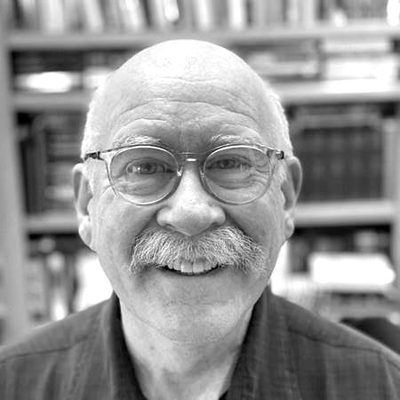
A panel with John Folmar, Tiago Oliveira, Tiago Santos, and Mack Stiles on partnerships between churches in different parts of the world. The conversation asks what helps these partnerships last, and what makes them fall apart.
Transcript
Panel discussion, “Enduring global church-to-church partnerships,” with Folmar, Oliveira, Santos and Stiles, Nicea Conference 2025, Istanbul. Speakers aren’t labelled in the source captions.
Introductions
Good morning everyone. So good to be together to today I’m going to check my watch although by God’s grace we ended exactly on time yesterday. So in the panel we have John. John thank you for that excellent message. It
was my joy to delve into the material and think about Nicea in the church.
Wonderful. Yeah, Tiago and Tiago. This is going to make a little some difficulties for questions.
My name is Tiago. His name is Tiago.
Oh, I’ll make sure to get that. So, welcome brothers. Tiago, did I do that
right? And Tiago, I’ve been in your places. And oh, I’m Mack Stiles. I’m an elder at Third Avenue Baptist Church and director of Messenger Ministries. Let’s introduce ourselves, right?
And I’ll try and work on my accent for the names.
Well, let me try and work on my accent for his name.
Tiago. Tiago. So I’m Tiago, but Tiago Santos. I’m from Brazil. I serve with grace baptist church in San Jose campus s paulo Brazil and also serve with fel ministries. Fel is a teaching ministry is been for 60 years serving in Brazil and Portuguese speaking countries and serve with Martin Bucer seminary Brazil.
My name is Tiago. I’m the pastor of the First Baptist Church of Lisbon and I’m also the president of Martin Bucer Portugal. So you see we share not only our names but the seminary names as well.
John Folmar senior pastor Evangelical Christian Church of Dubai.
Wonderful brothers. Of course Tiago I’ve been with you in S. Paulo and seen your work there. Very excited. John, you and I have had a long history together of
we go way back.
Beyond the lowest common denominator
Way back and I’m grateful for that and grateful to call you a friend. Tiago, I’m glad to meet you on this somewhat extemporaneous addition to the panel. So we love jazz, so we’ll just play jazz as you go. John, I’d kind of like to ask questions following your four points. And to start us off I think it’s important to talk about the lowest common denominator church that you talk about in one church. So I want to know what does the lowest common denominator church look like and what does a lowest common denominator Christian look like? I was exposed to this idea 20 years ago when I moved to the Arabian Peninsula. Not a lot of church heritage there and very international environment.
And I’ve come to the conclusion that denominations are actually a good thing because as I mentioned Trueman says it means somebody somewhere still cares about something. These secondary issues that divide us, they’re not unimportant. And there is a tendency I’ve noticed in remote missions contexts to simply downplay secondary matters that are important and integral to the definition of the church. So I’ll never forget I was it’s also doctrinal in nature. I was preaching 20 years ago from 1 Peter 1:es 1 and 2 where Peter talks about the elect exiles in the dispersion and I was dealing with the subject of election. So I taught on predestination and unpacked that and applied it. And after the service a good-hearted but crusty old elder came up to me afterward and he said, “John, our people don’t need that kind of refined doctrine. Why don’t you just do a topical series on marriage?”
And I came away thinking that he didn’t understand the significance of sovereign grace as it relates to our marriages and that it was a would be a missed opportunity. So that sort of represented the ethos that I think is prominent in many parts of the world where there are not long-standing heritage and denominational background.
Lowest common denominator.
Yeah. Yeah. How about you brothers? Talk to us about what a lowest common denominator Christian looks like. Well, I would say the gospel is essential always and without a true knowledge of what the gospel is and what it means to you as a Christian, you can’t really say that you are a Christian. So it’s and for you to understand what the gospel is, you really need to understand who God is and who you are as a man is who is a fallen man and desperately needs to be revived through the work of Christ. So you really need to understand who Christ is and you really need to understand the work of the Holy Spirit. So if I was going to reduce one central doctrine for one to be a Christian, I would say the gospel. The gospel is going to open the doors for so many others important dogma of the church and the word of God. You need to really trust the word. So you need an understanding of the what the word of God is. So you see to be a Christian is to know the gospel. But to know the gospel is to really understand who God is, who you are what the word of God is. And so I would say this is essential.
I would just add that in this I feel as a personal difficulty which is first in nowadays in defining if a church is a true church. So for example, if a member comes from another church, now I’m struggling significantly because churches care less confessionally and what in terms of saying publicly what they believe. And so the first thing is in because we are a confessional church in trying to discern carefully if the person comes from a true church or not and defining the gospel carefully.
Yeah. But at the same time as John was even talking earlier is the fact that we should also distinguish between things not only that are essential and non-essential but also things that not being essential to faith they continue to be important. And so on one hand to be very careful in not pushing aside those who are true brothers and sisters because they believe in the core of the gospel but at the same time not minimizing things that not being essential to salvation are very important both to protect the gospel and to promote holiness.
And I think that sometimes this is the difficulty. Have you brothers are you familiar with Don Carson’s book the gagging of God where he talks about triage theological triage maybe a comment you’re kind of outlining theological triage there maybe it’d be helpful to talk about those three things I think Ligon and Al has made Al Mohler has also done a good work on theological triage but any comments yeah
triage beginning with the primary doctrines that are the irreducible minimum of the Christian faith. Paul said, “What I received, I also passed on as a matter of first importance. It is those things that Christ died, that he was raised, etc.” 1 Corinthians 15.
That’s the definition of a Christian, one who believes those things. And then secondary doctrines being doctrines of that are non- primary. But Tiago’s point is that some of those are nevertheless essential to the integrity of a church. So there are certain doctrines that define the boundary of a church like baptism, like Lord’s supper. And therefore those can’t just be shunted off to the side. They have to be dealt with upfront in our pastoral ministry.
That’s how I think of triage most mostly.
I was just going to mention that a very practical situation we are living in right now. There’s we have a class for new members in our church and right now there’s a couple coming from another church. They seem to understand what the gospel is. They seem to be good Christians but they came from say an Arminian church and for them to really understand this and to embrace the sovereignty of God in salvation is a big struggle. And we as elders we go through interviews with the members. We do this triage. We first want to see how really they understand what the gospel is. And then of course there are other important doctrines that we talk about and church and church membership, church life. And this is one point that can be it can be divisive.
Yeah. You know,
does your church statement of faith prescribe that one must hold to the doctrines of grace, for example?
It does. We subscribe to the 1689 London confession of faith.
That’s the confessional standard of our church. And it will be very difficult for us even though we acknowledge they are a Christian couple to really welcome them in our congregation just because they will differ from a core teaching of our church in a way that can be even hurtful to the other members and to them. So if they are willing to sit under this teaching and really try to grasp it and learn it that that would be something. So that’s the point where we are going to have to discuss with them how much are they willing to learn it and to embrace it so they can be received as members.
It’s a matter of pastoral wisdom, isn’t it? To decide in your statement of faith how general or how precise to go in certain doctrinal distinctives.
I think about the people coming to us
from all over the world who have no idea about such things yet. They’re believers. What we’re looking for is a spiritual pulse. And we want those people in our church so then we can instruct them in these finer points of theology.
So what we usually say in our new members class is that we have a confession of faith because as a church we be we need to be united in a common faith and we need to defend a common faith that the Bible expects the whole church to be involved in those two things in both affirming together and defending together. And so our confession of faith seeks on one hand to define the things that are essential to salvation and the things that are necessary for us to be part of a common body. And so and again then it plays the pastoral wisdom how short or how far should we go in terms of that precision. But at least for me it’s important to define this that on one hand we need to be united in doing these two things but on the other hand we also need to define what is necessary for us to be united in a common church.
So limited atonement yes or no.
O just kidding.
Yeah. So I would just put it this way which is just be careful not to divide the church
in terms of that a certain tier of the church needs to have a certain confession and the other needs to have another confession that we should all be together in affirming the same
or eschatological viewpoints.
Yeah. Yeah. You know one thing that is beautiful about Scripture you see when you go through first Thessalonians in the final words of apostle Paul there he’s asking that this letter should be read before all the church the whole church and I think chapter 5:14 he will mention some of the people in the church who are not very spiritually healthy. So there are church members in different levels of maturity and yet the whole teaching should be given to the whole church. So even the ones who are not in the same level of maturity of spiritual maturity and even understanding you know are part of this covenantal community that should be taught everything that is important for their church life. So in a way it’s a pastor’s job you know to really help those people if they are willing to be helped and I think this the point is really try to understand how they really want to submit to the teaching and the preaching of the word.
Amen. When I was the pastor of the church in Erbil we were Baptist church we longed for a Presbyterian church to be there. Well so it wasn’t that we were opposed to Presbyterianism. We wanted the church to be we begged agencies to come and form a church in Erbil for the Presbyterian members that we had because we just knew that was their conviction and what they needed for their own spiritual growth and development. So, hey, let me let you’ve sort of touched on this. Let’s talk about these walls that we shake hands over. What was the quote, John? JC Ral said, “Keep the walls as low as possible and shake hands over them often.” It’s a great quote from JC R.
Let’s talk about how we shake hands over that wall.
One way that comes to mind is if you think of the preachers who have been on the platform over the last couple days. The vast majority of them have preached in our church in Dubai and these are guys who are Presbyterians and Anglicans and I want them preaching in our church because we’re reading their books and I want members of my church to be exposed to these guys.
So that’s one small example.
That’s a wonderful example. Yeah. Tiago.
Yeah. Well, I would say the same. I’m looking at my dear friend Sherif right now and I had the joy I am a reformed Baptist and I had the joy to preach to his congregation which is a Presbyterian church and I had the joy to have him preach to my congregation in Brazil which is a Baptist church and there’s so much we can do together in terms of collaboration not only in events or conferences yes that is a great platform where we can really get together with people from different traditions but even in church matters there are things that we can do together. Maybe Sherif we will not be able to plant a church together maybe but I think there’s much we can do in terms of teaching in terms of ministry in terms of collaboration and this is a great way for us not only to shake hands but to really embrace our brothers who are you know in the other side of the wall.
So let’s make it really short as much as we can.
No short walls. Yeah. But even with those that we are we don’t have those types of affinities in terms of preaching at our church. One of the things that I learned with our friend Mark is and we practice at our church now is to pray for other churches.
So that people understand that we have a lot of differences with them but there are things that we have in common and particularly the gospel and I think that that’s one of the ways that has been serving our church very well.
Yeah. I’ve seen I’ve learned as well from Mark about that and our church does it every week. We’re always praying for other and not just our denomination other denominations as well.
Holiness and church membership
So, I think that’s excellent. Well, let’s move on to holiness. The second point that John was talking about, especially Hebrews 12 and another quote, if you’re not striving for holiness, you’re not a Christian. It’s a pretty bold statement, John. I You want to defend that a little bit? Well, you did well, but I just think it’s good to flesh it out.
Yeah, I would never make that statement on my own, but it’s exactly what the writer of Hebrews is saying in Hebrews 12:14. So,
right. Yeah, that’s a pretty good way to flesh it out.
Yeah. When a person’s regenerated, he receives a new nature.
New affections. And of course, we all stumble in many ways. We’re all a work in progress. And brand new Christians, it’s often very difficult to discern that spiritual pulse.
Nevertheless, a sea change has occurred,
And it means something to be a Christian.
Yeah. Peter will say that Jesus is the holy one. And if you’re a Christian, you love Jesus and you want to be like Jesus. You want to walk his path. You want to be close to Jesus. And the more you love Jesus, the more the holier you will be. There’s it’s impossible for you to love Jesus and not want to be around him to close to him and not to seek holiness. It’s just impossible.
Isn’t that a basic understanding of salvation?
What are we saved from? And what are we saved to?
Why did we needed to be saved?
We had to be saved from our sins. Are we going to continue in those things? Yeah. How can we as Paul
says that that we are under condemnation for
That’s a completely nonsense. And I say this in a context. So I come from a confessional tradition and so I subscribe to the 1689 second London Baptist Confession of Faith and we tend to be very strong on doctrine. But sometimes our danger is that everything is cognitive. Everything is in our minds and the Bible doesn’t see it that way. And so if our faith is not producing good works, there’s no faith.
So it’s
let me more to the point of our churches. You know it I said this yesterday that unregenerate membership non-Christian members of churches are a scourge in the modern churches. How do we make sure that doesn’t happen? What means do we have to make sure that we don’t accept non-Christians into our fellowship?
Well, we want a pure church. But even as we think about screening and discerning where people are at spiritually, let’s remember the Lord gave us church discipline. So that in the regular life of a church, one who professes faith in Christ and yet who lives inconsistently with that, Jesus told us exactly what to do. Take it to the church and as a last resort, treat him as you would a pagan or a tax collector. So he has given us that tool for the purification of the church.
But one of the thing things we do is as you guys we have a membership class. We try to get to know them. We teach them basic tenets of who we are as a church. And for every new member coming in, one of our elders sits down and has a conversation.
With this individual and asks him about his conversion, his biography, his understanding of the gospel. We ask him to tell us the gospel in 60 seconds or less. Yeah.
And you can size somebody up pretty well in a 30-minute conversation.
Yeah. Yeah. We actually go through the same process you know in it’s the congregation ultimately who will accept in its body a new member but the pastors they have the call and the duty to oversee this process and then make sure that in this interview with a candidate to be a member they have a good understanding of what the gospel is and we can really assess the story of one’s conversion his or her walking with the Lord along the years. You can really assess
a lot in a conversation like that.
And other than that, as in throughout our church life, in the church ground, you can see if there are fruits the fruits of the Spirit, if they’re present in someone’s lives. Of course there are seasons of life when people sometimes will you know go through rough you know moments and their faith can become somewhat cold and again as pastors we are to be close to the these church members and try to help them through difficult times. But at the end of the day, a true Christian will always cling back to the Lord and in prayer in church worship in fruits and works of that are fruits of faith and that that’s that’s how we try to understand you know how one is really a believer.
Yeah. Agreeing with the brothers, I would put the stress on people coming in because church discipline is only for grievous
unrepented sin. But if someone is unregenerated but he is living very comfortably not committing very serious sin, they are still influencing the church in the way that they are living. And so be very careful in terms of accepting members, in terms of being very careful in clarifying the gospel, clarifying conversion, clarifying what would one expect from church membership.
And then of course it has to do a lot with teaching because people are exposed to the preaching of the word. And so if the culture overall of the church is both of expecting sanctification and a culture of discipling one another then the others become kind of minority because there is all this mood within the church that promotes this. You’re exactly right and we have made mistakes in the past. There have been times we have admitted people who on reflection should not have been admitted. And it’s difficult to remove under church discipline people about whom we have pastoral concerns. We think I’m not sure that person’s born again because it has to be objective.
It has to be serious and outward and unrepentant in order for a person to be removed. So amen to that. Let’s be careful in the screening process.
But and church discipline is somewhat of an acknowledgment that we will make mistakes. I think it’s a thing a grace of God to allow us to have church disc.
May I ask a question to John with all his experience which is my concern with this has to do more with new believers because on one hand we don’t want to stay like
two years discipling them in order to confirm the fruit. So how do you go about that in terms of on one hand be careful not accepting too soon but on the other hand you want to baptize if he’s a new believer you don’t want to wait like two years until it is really confirmed that the fruits are there we can relax we aspire to have a pure church but we know that until Christ returns there will be deceivers confused people and we try to extend charity and we take people at face value. We assume they’re not lying to us
and we sleep well at night and just try to do the best we can
and we can’t stop people from lying to us. I mean sometimes they’re pretenders
and we know that’s going to happen. So ultimately it’s to the Lord that we look for these things. Yeah. Tiago go ahead. I was just going to agree with them and say that in other words the you know the entrying door should be narrow and while the door to get out it’s a little wider I would say
The church universal
John you I want to talk about church universal. We’re running out of time here and I want to get to that. I when did you take the flags down at the church? Actually, it was
so I was a member of ECCD for years with John as an elder.
It was when we were renovating the main hall, painting the building. The planks had to come time to do it. You just took them back.
So, they were put in a side room.
I see.
And I didn’t have the courage to do this. It was actually our associate pastor, John Welner, who’s here. He said, “Hey, let’s just not push the put the flags back up.” Yeah, great idea.
Nobody ever asked about them.
Oh, that that didn’t come up. Well, it reminded me of Mark Dever’s taking the American flag down in church. Because it was so inappropriate to have an American flag in the front. I mean, Mark loves his country and he’s a patriot, but it was just inappropriate because we’re an international community. So I didn’t even notice myself. Was I there when the when you took the flags down?
I think you were gone. It was 2013 if I were you were gone. Well, I think it’s a good image of what we should be. You know, we’re not rallying around flags. So, well, is it true? I think you said it was true that you can grow a church quickly if you have a homogeneous church growth theory. It came out of Fuller Seminary. And I would venture it’s a little it’s effective right in a way sociologically but yeah do you guys have comment before John’s already had his comments about this but any further comments about the homogeneous growth theory and
well it grows fast but it doesn’t represent the gospel well
and that is the issue
that is the main issue
and so even before so I accepted the call of the first baptist church of Lisbon so I grew up in Portugal but went to the US and stayed there for 10 years studying. I’m back in Portugal now for four years and I received the call of First Baptist Church of Lisbon three and a half years before
going back. So I had been praying for years even before being the pastor there and one of the things that I would pray and continue to pray is for diversity. It’s not because diversity is a value in itself, but because where I serve, Lisbon is very cosmopolitan. And so praying to God that it would be a good representation of the diversity and the plurality and that God is fulfilling his promises to all nations.
Yeah. And so that’s a very powerful proclamation of what the gospel is about in a world and as you were saying we feel the same in Lisbon that you have pockets of nationalities because people just ga gathered together because they speak the same language because they have the same traditions because they feel comfortable and then coming to church and then you have that diversity that’s very powerful
so powerful
because the thing that we share in common is nothing else many times but the gospel but that’s more powerful and stronger than any other
it’s above everything it’s just like Paul says in his letter to the Colossians there’s no Jews or Gentiles or slaves or nobles or rich or poor and always one in Christ and the diversity of the church is a testament to what Paul will call polypoikilos and the beauty of the church.
People from all different origins and stories and backstories, they come together under the gospel and it’s just I think when you have a church that a church group of these characteristics of all sorts of different people, young and old and men and women and different social classes and it’s just a proof that what is actually brought them together as a testament that what brought them together was the preaching of the word in the gospel.
Amen. I remember I was at the student center at the university in Dubai and we had had a number of our church members who were students gathered around the food court. They’re talking and they’re laughing and some people came up to them and said, “We heard there was a United Nations delegation here. Are you all that group?”
And they said, “No, we’re Christians.” And we love Jesus together. You know, of course. So the thing I love about students is how open they are about things like that. And so yeah the world notices doesn’t it when we come together across these natural differences. So yeah in Brazil for one Brazil is a large country continental country. So there the evangelical movement is growing very rapidly there over 60 million evangelicals but this is broad evangelicals. Most of them especially from the charismatic movement they don’t really know the gospel and what I have been witnessing there is there it’s really not difficult to make a church grow
you know but it’s really difficult to make a true church grow in a sense but if you know one employs this and that technique it’s quite easy to get a lot of people together
but to have people who are really there because of the power of the gospel is something else you know that’s what we are really striving to do in our church and I can see that there are good healthy churches that are doing that some of them are growing like Jonas Maduras’s church Tiago Oliveira knows him well he’s in S Paulo he planted this church about six seven years ago and people are being attracted to this church because of the preaching of the word. So it’s a new church but about 7800 people are getting together there every Sunday you know so it’s a slow growth in comparison to some of the mega churches in Brazil but it still is very impressive to see how the word of God can also attract people in such a way you know and you can see healthy growth in a church where the gospel is also you know strongly preached.
Word-centered churches
Yeah. You want your church to be centered around the preaching of the gospel and that’s what’s attractive
and when we start trying to make it attractive by worldly message we lose the gospel in the end so yeah well let’s go to the final point John about apostolic church I love the concept that we don’t have an apostolic succession of bishops but an apostolic succession of truth comment more on that how we see that in our fellowships.
Paul talked about not hesitating to preach the whole counsel of God.
And it’s the commitment behind that statement that should characterize the whole approach that we take to our weekly gatherings in our churches.
How do you all see that?
Well, I see that in the word.
Okay. And the and if the word is at the center of church life that’s why we are or I think that people that are here tend to be picky in terms of certain things for example expositional preaching
Is that our role as pastors and preachers is basically opening Scripture reading Scripture explaining Scripture applying Scripture
So that’s how apostolic we are Yeah,
we continue in the same tradition and we continue united as in Acts in the apostles teaching.
I think I don’t think Lig maybe made this up, but it’s the person who taught me that we don’t just preach the word, we pray the word, we sing the word, we see the word in the ordinances. Everything that we do should do that. And in many of our contexts, it’s so important in singing that we are making sure that it’s gospel- centered. You know if you’re not focused on the words and singing, you can start moving into atmosphere
rather than people don’t normally recall sermons, but they remember songs by heart. Most of the songs we sang here if we start to sing it even without the projection most of most people will be able to remember the lyrics and start singing together. But if you ask the very words that was you know preached say even in this first sermon in this conference it’s going to be kind of hard to recall. You will know that you have heard a good sermon but you hardly you’ll be able to remember every word that was said there. Maybe if you wrote it down in your notebook and even then, right?
So you know, music is powerful and it’s a powerful way for us to teach the congregation the true gospel and beautiful doctrines of the word of God when we sing to one another. And because there’s a lot of feelings in the also you know affection that can be expressed through music and maybe that’s why we remember the lyrics you know yeah to be able to select the lyrics well the theology of the music well it’s a very important pastoral duty that we cannot really take for granted you know and because this is going to teach the church in a very powerful way. I don’t think it’s going to teach more than the preaching. The preaching should always be the primary teaching tool of the church. But yes, music and songs will teach the congregation. Prayers will teach the congregation. So we have to be sure that our prayers and our music are really embedded with Scripture. Mhm.
You know pragmatism and innovation are one of the other scourges of the modern church. I John, you touched on it. You kind of connect pragmatism with innovation. Tell us about that. How does that happen? For one, why do we do it? What’s the impetus for that? And how do we in a good way stand against it? Stand against innovation. Can I go back to the previous point about exposition?
Oh, sure. Oh, sorry. Yeah.
Because when we talk about forgetting sermons that were just preached, it kind of makes me depressed as a preacher. But I’m reminded that while certainly it’s true and people are not going to remember the sermon outlines from three weeks ago, but what are we doing when we expound Scripture? We’re teaching the people how to study the Bible for themselves.
And it’s the method as God’s people are hearing God’s word unfolded. They’re learning how to read their own Bibles. That’s one thing. But the other thing about preaching, yeah, we might forget two weeks later what the sermon was about, but in the moment, last night when Harshit was preaching on the Holy Spirit, we were communing with God.
And we were being strengthened in and through the moment.
And yeah, we might forget in six months.
but we were enriched by the presence of God.
And John, don’t be depressed. Your preaching really touched my heart over the years. I’m so grateful for Yeah, Tiago. Go ahead. If it helps. Look, I can’t remember what I ate
in my you know, in my home three weeks ago. I know my wife, she normally cooks a very nice meal for me. So, I know that I have ate
I have had a very good meal, but I don’t really recall if you ask me, but I know that I’m here because I did eat.
So, it’s the same with the good preaching. You know, the church is standing because good preaching is happening.
Yeah. When I was interviewed to be the pastor at Erbil, they in the interview before the congregation, they asked me, “What’s a sermon that changed your life?” And I said, “I really don’t remember what.” but it’s the constant washing of the word over time that really changes us. So pastors, be encouraged. Don’t get depressed. Be encouraged that the word washes over us over time. Yeah. Any other comments about that? I’m sorry. I moved on too quick. I am watching the watch. Good. Let’s talk about innovation. You all remember the emergent church years.
I mean, what happened to that? It’s just like gone. You know, it’s so interesting to see these fads. I mean, they’re church fads and people want to innovate and be creative, but in the end, it’s thin. We talked about thick and thinless. So thin when people try and innovate something new rather than stick to the word of God. How do we see innovation happening? What any particular innovations that are on the horizon or
An old faith
Well, if I may say so our faith is old.
Mhm. We have a very old book. Last part of this book was written 2,000 years ago and some parts of it was written 3,000 years ago. So what is innovation when we are dealing with the revelation that was given for the edification of the church so long ago? I think what we really need to grasp is what is in the word. So I whenever people come up with something that nobody said before, the chances that this is heretical are almost 100%. So we have to be careful about innovations when we’re dealing with something that is part of a very long tradition and it’s part of you know a revelation that was given so long ago. We maybe we should just to go back to what the Lord has said and stated through the witnessing of prophets and apostles and stick to that.
Yeah. The great pioneer William Carey in India, faithful, fruitful ministry for 40 years. What was the secret of his ministry? He said, “I can plod.” He just did the same thing every day. He was attending to the ordinary means of grace in his church and just doing the hard work of language learning and translation and evangelizing. And this is what we should do in our churches. We have an old faith. We’re celebrating a document from 1700 years ago
that encapsulates it. Our job is simply to proclaim that message again and again. Certainly we apply it in fresh context and individually to the people in our congregation but yeah our job is not to be creative and we just do the same thing all the time.
Is just remembering that contextualization or creativity or things like that they are not primary. When we make them primary we invert the main issue and just remembering that that the gospel should be primary and remembering that our faith is done by imitation
like I don’t want to do anything new the pattern that we have set in Scripture and that Paul for example speaks to Timothy and to the churches is imitate me as I imitate Christ. And then he says to Timothy, you be the example. And then you pass to faithful men that they might alo also do the same. Yeah.
And so here we are 2,000 years after saying exactly the same things, doing exactly the same things in a different context when with a different language, but still is the same gospel. So keep the gospel primary and the other things secondary. We can maybe use you know different means to for the same gospel to go out there you know we use different kinds of medias right now this is being recorded it’s going to be on YouTube you know Paul didn’t have that
you know and there’s different tools which we can use you know to reach people and then but the means of grace are all the same and then yeah
you know it’s the preaching it’s is the work of the Spirit,
right? And it’s the same message.
It’s the same message
that that can’t change. We cannot innovate on that.
Good brothers, I’m so grateful for you all and grateful for your ministries, your work, your thought, your love for Christ. And John, thank you again for tremendous exposition of the Nicene Creed. I know you usually like to exposit the Scriptures but it was a great word for us. Tiago, will you pray for us? Close our time. Yeah. Let’s pray together.
Prayer
Dear heavenly Father, what an amazing moment we are living in these days. We can get together in this place. Open your word and know that your spirit will speak to us through the word and you have spoken.
You have spoken to us these days in this conference and you have been speaking through the ages through your word. 1700 years ago, bishops and men from your church came together to think together to pray together to come up with a powerful statement that reflects the teaching of your word.
It wasn’t innovation. It was your the very teaching of the apostles now being stated by the church which we now celebrate so many years, so many centuries after that because they will always send us back to Scripture. And we celebrate this now with joy in our hearts because this is as a testament of your faithfulness. Your promise that the gates of hell would not prevail against your church.
Your church is advancing, is going forward, is moving forward. Your kingdom is moving forward and growing. And it’s such a fruit of grace for us to be part of that. And we want to express our joy and thankfulness to you, oh Lord, for you brought us together in Christ as part of your church.
And you gave us this very unique opportunity to be together in these days, in this place. And we ask that you may bear fruit, bring much fruit of the teaching that we have heard here, of the fellowship that we have enjoyed and the conversations that took place.
That this may go on and further and new and beautiful things of collaboration for the sake of the kingdom. May come up out of this. Oh Lord, I ask that you may bless every one of my brothers and sisters who are here today. That your spirit may dwell among us and among them as they go back to their homes and to their churches that you may be with all of us.
And I pray that the teaching that we have heard here may go on as we go back and serve our own churches for the glory of your name and for the good and edification of your people. We pray these things in the name of our Lord and Savior Jesus Christ, the Son of God of God, light of light. Amen.
And all the people said, “Amen.” Amen.
Thank you. Thank you so much.
Keep going
More sessions






