
Nicea Conference

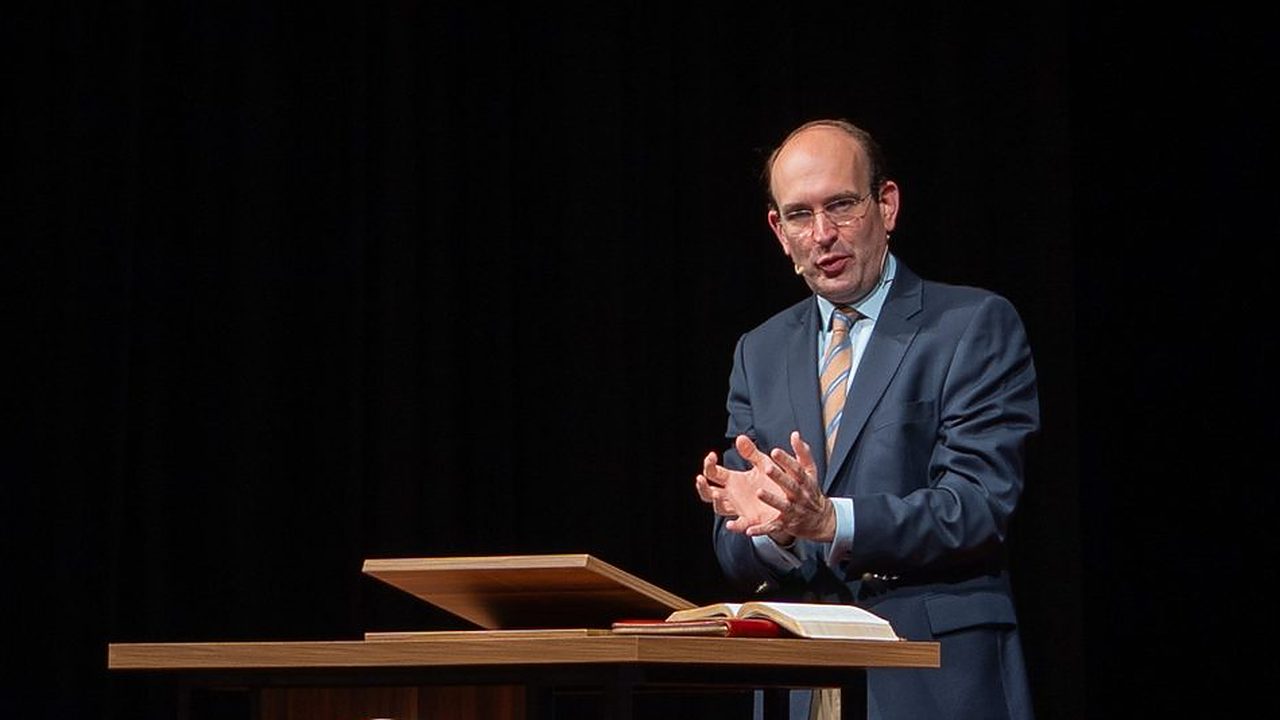
A summary of the session
Michael Reeves's plenary session focuses on the Creed's confession of one Lord Jesus Christ. It considers the divinity of Christ, the Son who is truly God.
Transcript
Michael Reeves, “God the Son: The Divinity of Christ,” plenary session, Nicea Conference 2025, Istanbul.
The cornerstone of Christianity
The center, the cornerstone, the jewel in the crown of Christianity is not an idea, a system or a thing. It is not even the gospel as such. It is Jesus Christ. Jesus Christ is not merely one topic among others.
He is the radiance of the glory of God. He is the treasure of the Father shared with us. And he was the matter of Nicea 1700 years ago. When the bishops gathered, it was not to discuss some dusty question that could only interest a theologian.
It was to answer Jesus’ question to Peter: Who do you say that I am? Amid confusion as to what it means that Jesus is the Son of God, Nicea answered in words that here in Istanbul would be turned into the central affirmation of the Nicene Creed:
We believe in one Lord Jesus Christ, the only Son of God, eternally begotten of the Father, God from God, light from light, true God from true God, begotten not made, of one being with the Father. Through him all things were made.
And because of the centrality of Jesus Christ, those words are probably the most significant words outside of Scripture. They bring together scriptures own witness to Christ so that we might know him. And so they are words that deal with most of our Christian problems and errors of thought.
And if that sounds like an overstatement, let me read you something that the French reformer John Calvin said amid all the debates and disagreements of the Reformation. He said this:
How is it that we are carried about by so many strange doctrines but because the excellence of Christ is not perceived by us? There is nothing that Satan so much endeavors to accomplish as to bring on mists with a view of obscuring Christ, because he knows by this way the way is opened up for every kind of falsehood. And this therefore is the only means of retaining and restoring pure doctrine: to place Christ before the view such as he is with all his blessings, that his excellence may be perceived.
Yes, as Jesus said, it is those who honor the Son who honor the Father.
Inside the logic of Arius
Now to understand what the Council of Nicea meant by those words about Christ, we need to get inside the logic of the Arianism they were opposing. Now, Arianism could seem like a minor historical curiosity, making Nicea the answer to yesterday’s problem. But in fact, Arianism was built on a foundation that people, yes, Christians, use every day.
For Arius, it all started with what seemed reasonable. So for Arius, it worked like this. We look around at the world and sense that everything has been brought into being. So something caused everything to be. And we’ll call that something God.
So God is the one who brings everything else into existence but is not himself brought into existence. He is the uncaused. That is who he is. So for Arius the very nature of God is to be uncaused or ungenerated: that everything else is caused to exist but God is not. And for Arius it follows logically: if the Son is begotten or generated by the Father, the Son simply does not fit our basic definition of God. Being begotten, he must be a creature.
God is ungenerated. But the Son, if begotten, must have come into being at some point. And so the eternal Son disappeared in a puff of philosophy. It meant that for Arius, the Son was nothing like God at all. He may be qualitatively different to all other creatures, exalted above them. He may seem godlike to us, but in fact, he is in the end a creature, not God. He’s infinitely subordinate to God.
In fact, since in Arius’ thought God is so transcendent, he would never dirty his hands with creation, God created the Son to go to do the work of creation. So you could say God created the Son for us, not us for the Son.
Now, Arians did have biblical arguments for their position. And you may have heard these from modern-day Arians. They loved, for example, Hebrews 1:5, “You are my Son. Today I have begotten you.” And the Arians argued, “If there is a day on which God has begotten his Son, surely there’s a day before which he was not begotten.” So for example in Acts 13 Paul refers to those words quoted from Psalm 2, “Today I’ve begotten you,” and says they refer to the resurrection. So to use Arian logic, it would mean before the day of resurrection Jesus was not the Son.
But Scripture could not be clearer that Jesus was the Son before his resurrection. The Father called him his beloved Son at his baptism, at his transfiguration. Indeed, before Jesus was even born of Mary, we read, “God sent forth his Son into the world” [Galatians 4:4], sending his Son into the world that the world might be saved through him [John 3:17]. So, the Arians, oh, they used Scripture. And this may sound familiar if you’ve ever played biblical ping-pong with a Jehovah’s Witness. Proof text after proof text. They sounded biblical, but actually their biblicist language was a cloak for the deeper rationalism that actually drove them.
Knowing God through the Son
Arianism began with a basic presupposition: God is ungenerated. And Scripture was then wheeled in to support that assumption. In polar contrast, Nicea wanted to start not with a philosophical presupposition but with God’s self-revelation. They believed John 1:18:
No one has ever seen God. But God, the only God who is at the Father’s side, he has made him known. [John 1:18]
The Son, he is light from light. We see the light of the knowledge of the glory of God in the face of Jesus Christ. And so it is through him and only through him we come to know the only true God and so have life. So don’t believe the urban myth that the early church fathers did their theology driven by Greek philosophy.
Unlike Arius, they sought to do their theology in the light, shaped from beginning to end by God’s self-revelation. And a young secretary at Nicea called Athanasius put it like this. He said, “It is more pious, more accurate to know God from the Son and call him Father than to know him from his works and call him unoriginate.” In other words, the way to think about God is to start with Jesus Christ, the Son of God, not some abstract presupposition. In fact, you shouldn’t even try to know God purely through his works only, in other words, doing what Arius did and say, “So God is the creator.”
Because if you say God is the creator, you’re making his identity dependent on his creation. Rather, we come to know who God is through the Son, who reveals who is that creator. When we start with the Son in our knowledge of God, we find the first thing to say about God is as it says in the first line of the creed: we believe in one God, the Father.
Not ungenerate, but Father. Now, of course, the reality for Arius was that we could never really know what God is like. If the Son is fundamentally unlike God, if he’s a mere creature, then he’s not actually revealing what God is like. But if the Word become flesh is God, he shows us the very being of God. You’ve seen me, you’ve seen the Father. As true God from true God, he displays the innermost reality of who God is.
No God in heaven unlike Jesus
And friends, this is no theological nicety. It remains pastorally vital, because so many Christians, they believe Satan’s lie that behind a smiling Jesus there hides a frowning Father. They have this sneaking suspicion that behind Jesus, the friend of sinners, is some God who is a little thinner on compassion and grace.
And that is what makes them go spiritually cold. They, in Paul’s words, exchange the truth about God for the lie. But the truth is there is no God in heaven who is unlike Jesus. He is God. “I and the Father are one.” God cannot be otherwise.
And this was what the church fought for at Nicea: that Jesus truly is God. He is the Lord God of Israel himself. God from God, light from light, true God from true God. In him we see the true meaning of the love, the power, the majesty, the glory, the holiness, the righteousness of God. And all our thoughts about God, if they’re not shaped by him, however respectful, are not Christian. And there is a lesson for those of us who hold to what is sometimes called a big God theology.
Arius had a big God theology, but it was a Christless big God theology that would make people dread and not love the Almighty. And so the Arians, they looked to the might of the creator, thinking that was the full display of his majesty. And it is all too easy for us today, if we want to show people God’s majesty, to point to his transcendent might as creator, which is right to do. But Nicea shows us we can point further into the identity of God and point to the inner sanctum of God’s glory and greatness: the glory of God seen in the face of Jesus Christ.
And there we see not just the majesty of the power of the creator. We see the majesty of a compassionate Savior, the gracious heart of the God who creates. One old Puritan, Stephen Charnock, once wrote this. He said, “Is not God the Father of lights, the supreme truth? Is he not light without darkness, love without unkindness, goodness without evil, purity without filth, all excellency to please without a spot to distaste?” And he thinks, Stephen, you are happy in God.
Where did that come from? And he’s absolutely clear. He said:
The clear knowledge of God is attained only by Christ. But nothing of God looks terrible in Christ to a believer. The sun is risen. Shadows are vanished. God walks upon the battlements of love. Justice has left its sting in a Savior’s side. The law is disarmed, weapons out of his hand. His bowels yearn. His heart pants. Sweetness and love is in all his carriage. And this is life eternal: to know God believingly in the glories of his mercy and justice in Jesus Christ.
Christians do not believe in an abstract supreme being but in the Father made known in the Lord Jesus Christ, the only Son of God.
Begotten, not made
But let’s press a little deeper now into the nature of the only Son of God by examining words in the creed we’ve not yet looked at in its sentence on Christ. So: God from God, light from light, true God from true God. We’ve seen a little, but where we enter Nicea’s Holy of Holies is in these words: eternally begotten of the Father, begotten, not made, of one being with the Father. Just maybe take a mental sip of coffee at this point, because here we’re in the depths. Let’s start with that phrase, begotten not made. This was the epicenter of the battle of Nicea.
Because what confused many (this may be confusing, so hold on tight), what confused many was the Greek word for originate or come into existence was, listen carefully, genētos. The Greek word for begotten was, listen carefully, gennētos. But the word for originate or come into existence had one nu, one N. The word for begotten had two nus, two N’s. They looked and they sounded identical. They looked very similar.
And so it seemed reasonable to suppose that to be begotten means to come into existence, because the two words look so similar. And with humans, to be begotten is the same thing as to come into existence. So when a human father begets a son, that son starts to exist.
And so the Arians supposed that’s how it must be with God. If the Son is begotten, he starts to exist at some point. But Nicea argued, just as we should not start with our human presuppositions about God, so we should not read our human experience of sonship up into God and say God is exactly like us.
Because with God there is a difference between being begotten and coming into existence. So what’s the difference between begotten and made? Begotten, not made. What’s the difference between those two? Well, when one begets, one begets something that is the same being as oneself. So humans beget humans.
The Father begets the Son. On the other hand, when you create something, to make or create, you create a different kind of being. So humans make cake. God makes the world. Do you see? Humans do not beget cake, nor do they make humans.
God does not make the Son or beget the world. So when Nicea said the Son is begotten not made, it meant the Son must be one being with the Father, in Greek homoousion tō patri. Now even here there could be a little bit of confusion. Just hold with me for about two more minutes through this thick stuff; I’m hoping it’ll all become very clear. To say the Son is one being with the Father, it could sound like you’re saying the Father and the Son are just made of the same divine stuff.
You could imagine it’s as if in heaven there is some big pot of godness and the Father and the Son just come out of that. But if that’s what we’re saying, that would imply there in fact are two gods who are just made of the same constitution.
Nicea explains, no, the Son is begotten from the Father, not from some stuff called god. The Son is not from some divine material, some third thing called godness. No, he doesn’t merely share some being with the Father. The Son is begotten from the being of the Father.
There is no god stuff underlying, preceding the Father and the Son. The Son is of the Father. And if you’re experiencing a slightly drowning sensation now, well done. Here’s the point. Nicea wanted to go deep, to stop anyone thinking there is anything deeper in the Father than his fatherhood.
He is Father all the way down. He did not become Father at some point. If he became Father at some point, we’d have to ask, so what was he like before he became Father? What’s underneath Father? What is that godness like? What is he really like?
No, the Father has his identity as Father. And that’s where the creed starts: we believe in one God, the Father. God is the Father begetting the Son. He’s never without the Son. He never started begetting the Son, else we’d have to say at some point he wasn’t yet Father, but something else.
What sort of God do we worship?
If God really is Father, he is always eternally Father, eternally generating his eternal Son. And seeing that helps us to see that the issue at Nicea wasn’t just the deity of Christ, the presenting issue. The ultimate issue was this: What sort of God do we worship? What sort of God is revealed in Jesus Christ? And the Nicene bishops held they worshiped a radically different sort of being to the God of Arius.
You know, people sometimes feel uncomfortable with the creed for using words and phrases not found in Scripture, like “one being with the Father.” But in reality, the Council of Nicea was simply affirming the truth of Scripture, that God is as he reveals himself to be. The Father has not chosen to become something he once was not. When he calls himself Father, it is because he really is Father. The Son really is Son.
The Arians claimed to be scriptural. But by denying the eternal Son, they denied that God was eternally Father. He must have become Father at some point. And so they came to know a different sort of God. And what a different God.
Arius’ God might have superficially looked transcendent. In truth, Arius’ God was profoundly needy. So Arius taught God was so transcendent he didn’t want to dirty his hands with creation, and so he created his Son to do the work of creation for him. Now, what looked like an affirmation of God’s greatness was actually an admission of his weakness:
that God couldn’t even achieve what he wanted without his created helper, the Son. Poor little God. He was, as Athanasius would say, a God in process of completion. As time went on, he was needy, not full, incomplete. In fact, Arius’ talk of a God without a Son described a barren, lonely god. His god was not fruitful, generative by nature. And so, why would such a god create?
Only the eternally begetting Father, never alone, would have the desire or the ability to go out and create life, that his Son might be the firstborn among many brothers. And it’s striking how that difference between the lonely, barren, empty god of Arius and the triune Lord of Nicea, how similar it is to the comparison between the Lord God and idols in Jeremiah 2. In Jeremiah 2, when Jeremiah describes false gods in verse 5 [Jeremiah 2:5], he uses a revealing word sometimes translated worthlessness or emptiness. He says the false gods, the idols, are like a passing breath.
They’re nothing, insubstantial. They can’t do anything. The word is the word used in Ecclesiastes so often: vanity, meaningless. That is what the false gods are like: empty. Whereas the Lord God, Jeremiah 2:13, is the fountain of living waters, full, overflowing. The God of Nicea, unlike the god of Arius, is an eternally overflowing fountain, eternally generating the Son. The Father is superabundantly, outgoingly full. He is such a God that he would have the whole fullness of deity dwell bodily in his Son, Colossians 2, so that from his fullness we might all receive grace upon grace. That’s our God. Or to use an image used by the Nicene Creed itself, the God of Nicea is like an eternally radiant sun.
So one of the theologians at the Council of Constantinople, here in Istanbul, that refined the words of the Nicene Creed put it like this. He was commenting on Hebrews 1:3, that the Son is the radiance of the glory of God. And he said this:
As the light from the lamp of the sun is of the nature of that which sheds the brightness, so the apostle would have us consider that the Son is of the Father, and the Father is never without the Son. For it is impossible that glory should be without radiance. And it is impossible that the lamp, the Father, should be without brightness, the Son.
So the Father is never without the Son. But like a lamp, it is the very nature of the Father to shine out the Son. It is the very nature of the Son to shine out from his Father. The Son has his being from the Father as Son. In fact, the Son is the going out, the radiance of the Father’s being. And so the creed speaks of the Son of God as light from light.
The Father is the shining lamp that cannot be without the brightness of the Son. And only in the face of this Lord Jesus Christ can we begin to understand the true beauty and goodness of this God’s glory. His glory is not a grasping, pining glory. It is the radiance of the one Paul calls the Father of glory, the one so superabounding in life and blessedness that he generates glory. In him we see a glory infinitely more lovely than the needy, grabbing glory of idols, without any need or lack. His is the radiant glory of overflowing fullness.
In him we see a glory that shines light into darkness, that confers good, that gives life and righteousness to the unworthy. Here is a God who is completely sufficient. And you know, it is only when we see the radiant, self-giving beauty of the glory of God, only then will we begin to love the glory of God more than the glory of men. Hope for liberation from ourselves and from spiritual emptiness lies only in the God of our Lord Jesus Christ, the Father of glory, whose dazzling allure is seen in the face of Jesus Christ.
A different salvation
But there is even more to enjoy here, because it wasn’t just the identity of God that was at stake at Nicea. It was also the nature of salvation. Because having imagined a different God, Arianism presented a different gospel with a different sort of salvation. So think about it. If the Son was a mere creature, if he was infinitely subordinate to God, unlike God, then the Son has never actually known true intimate communion with God. He’s only known God from a great distance. And so, if the Son has never known true communion with God, how could he share communion with us? For Arius, there could be no true communion with God. And in any case, the lonely god of Arius was not interested in communion.
It wasn’t as if the Father ever loved the Son in Arius’ thought. For Arius, remember, the Son was just God’s hired workman. And if he was created for the task of just dealing with God’s creation, it means their relationship, the relationship between the Father and the Son, was a contractual one. Their relationship, in other words, was performance-based.
And so, if the Bible ever spoke of the Father’s pleasure in the Son, it could only have been because the Son had done a good job. Do you see it? In Arianism, you have an employer God who deals with his creatures contractually: you do a good job and I’ll reward you. And so, no wonder in Arianism and modern-day Arianism, such as seen in the Jehovah’s Witnesses, they completely failed to grasp a salvation that is all of grace. Of course, because of the nature of their God. Arius’ God was not a fatherly God of kindness and grace. He was an employer.
And in fact, the problems go even deeper. Because if God is not motivated by love for his Son, if God’s not motivated by love, what motivates us who are made in his image? If we’re made in the image of a contractual God, then we must be made simply to do the right things.
So no need for a new birth or a new heart that loves God. We just do the right things. So in what sense then could Arians even talk about salvation with this God? Well, as Arius saw it, the Son was an inferior being who rose by his works to merit a place on the throne of God. He didn’t belong there eternally.
He was going for a throne he’d never known. And so, do you see, just as God actually used the Son as his hired help, now the Son uses the Father to get himself a heavenly glory he’d never had before. And so, the Arian Son shows us the Arian way of salvation. We are to ascend to God by works.
A subordinate Son meant a salvation by works. In polar contrast, Nicea proclaimed, “The Son is one being with the Father.” He’d always been at his Father’s side in glory, eternally beloved. And therefore, it wasn’t to advance himself. But as the creed says, for us men, for our salvation, he came down, was incarnate, rose again, and ascended into heaven. It was all for us. When he ascended into heaven, he wasn’t rising to a glory he’d never enjoyed before, as it was in the Arian scheme.
The Son was going home to the throne that was always his, but now taking us in himself, to share his blessedness, his communion with his Father, his sonship. For Nicea, the Son was not an example of how to climb up to God.
The Son is God himself come down, achieving everything for our salvation, uniting himself with us so that we can enjoy his fullness of life. Only with this eternal Son, one with his Father, can we be brought to true communion with God.
Only because he is truly Son can the Spirit of the Son cry in our hearts, not “O ungenerate,” he cries “Abba, Father,” for kind Father our God truly is, and adoption by grace is his blessing. Arius’ God could never offer that.
Only the eternal Son, the only God who’s at the Father’s side, only he can give us the right to become the children of God, to be with him where he is. And all because of the overflowing fullness of his graciousness. Through him, the one eternally begotten of the Father, we see the true and radiant glory of the living God who is Father, Son, and Spirit. Through him, we worship a gracious, true Father, who sent his only begotten Son for our salvation and breathes out his Spirit that we might have not distance but his otherwise unattainable life. And so because of him, we cry:
Glory be to the Father and to the Son and to the Holy Spirit. As it was in the beginning, is now, and shall be forever, world without end. Amen.
Keep going
More sessions






