
Nicea Conference

A summary of the session
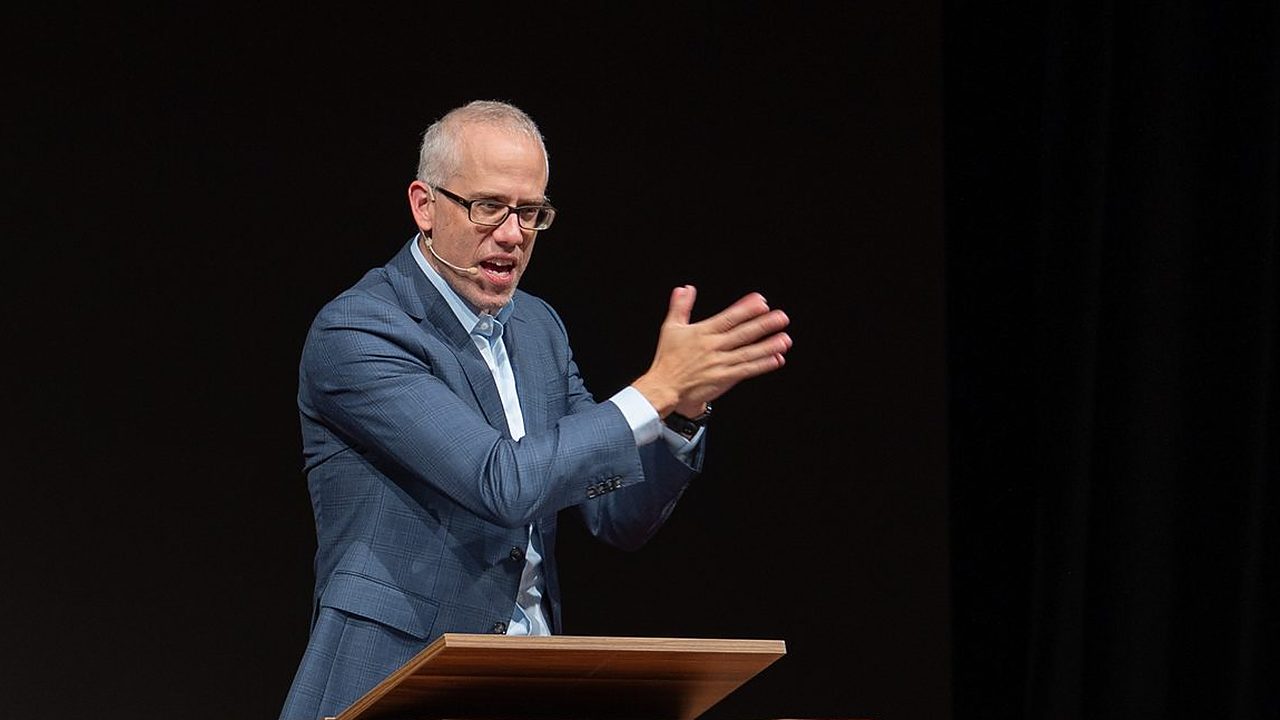
Kevin DeYoung's plenary session focuses on the Creed's words that for us and for our salvation Christ came down from heaven. It considers the humanity of Christ, the Son who became truly man.
Transcript
Kevin DeYoung, “God the Son: the humanity of Christ,” plenary session, Nicea Conference 2025, Istanbul.
A road map
Here’s the road map for our time this morning. And I know your heads and hearts and brains are already full. So entrust this time to the Lord that it will not be wasted. You have not traveled all this distance. Some of you from a few miles, though Scott just said five miles is 45 minutes here in Istanbul, and some of you from the other side of the world. So, we trust that we are not engaged in wasted religious activity, but we want to think and feel and so be moved by the truths of God’s word. So, here’s our road map. I want to talk a little bit of history, then theology, then end with some exegesis. Hopefully everything will be biblical but since we are talking about the Nicene Creed that’s where I want to start and then the bulk of this message will be trying to unpack some theological terms in and related to the humanity of Christ and then very briefly at the end we will turn to a passage of Scripture and try to answer the all-important question so what difference does any of this make? So first then some history. The Nicene Creed as we have just heard so ably taught by Dr. Reeves. Doesn’t he have a marvelous voice?
You may have noticed before. So I wrote the biggest story Bible story book of Bible stories or whatever it’s called. And they Crossway made videos and I’m trying still not to be personally offended that they asked Michael Reeves to narrate the video. I think we all understand why not Kevin DeYoung. So Michael has just taught very ably about he called it the holy of holies in the creed begotten not made. That famous term homoousios meaning that the Son is of the same essence as the Father and that is in one sense the heart of the creed is its confession related to the Son the person of Christ but the longest section in the creed is actually related to the work of Christ and the transition to this new section occurs with the words who for us and for our salvation.
It’s easy to overlook that subordinate clause, but these phrases are what make the Nicene Creed tick. If we say one substance with the Father is the heart of the creed, then to carry the analogy who for us and for our salvation would be the beating of that heart. In other words, the reason that Christians care so much about a careful definition of the person of Christ is because of what it means for salvation through the work of Christ. As we just heard, only a savior who is true God and true man can save us as men and women. Or to put it another way, we need a God who comes all the way down from heaven, who for us and for our salvation came down.
to have one who is merely similar to God or a created being like God to come down would be something if someone very important in your country be it a president a prime minister an Instagram influencer were to come down it would be significant look who’s here but to have the God of the universe come down is what we confess in the very heart and the beating heart of the creed.
Apollinarius and the creed of 381
In the version of the Nicene Creed that we know as the creed, of course, there was the council in 325. The creed as we know it was then further augmented in the council of Constantinople in 381. It says he came down from heaven, was incarnate by the Holy Spirit, by the Virgin Mary, and was made man. It was not so stated in 325 at the statement of Nicea. But by the time of 381, the creed of Nicea more carefully defined what it meant for this Son to come down.
Scholars are some disagreement about whether that added statement, that further statement in 381 was meant to counteract the teachings of Apollinarius. But certainly by 451 in Chalcedon also right here in this city this part of the world in Chalcedon by that time in 451 they certainly saw what the bishops had done in 381 to be a specific response to a heresy that we now know as Apollinarianism.
So what was this belief Apollinarianism? And who was this man? Apollinarius. He was a bishop in Syria. He was a friend of Athanasius. He was a proponent of the theology that came out of Nicea. So when you hear Apollinarianism and you know that it will be condemned as a heresy, you may think, well, he’s another Arian. Far from it. He very much was opposed to Arianism. He was determined to defend the full deity of Christ. And here is an important lesson for us as we do our history, but also as we live in the present. Almost all heresies come with a noble attempt to defend one set of biblical truths at the expense of other biblical truths. And so Apollinarius knew Arianism bad. The full deity of the Son is essential. Like many ancient heresies, it’s hard to know exactly what he taught, what his followers taught, what later views were ascribed to him. But in simplest terms, the problem with the theology of Apollinarius is that he denied that the Christ had a human mind or in philosophical terms they called it a rational soul. Here’s how he thought. Human beings are made body and soul. We have an immaterial spirit and we have a material physical body. So in order for Christ to be human, he only needed to have a human body. So a human body was joined with the divine logos, the word made flesh. Isn’t that what John says?
So the word took on physical human flesh. We know that from Scripture Apollinarius taught. But then he said in order in his mind to protect the fullness of Christ’s deity. He said but this son who took on human flesh did not have a human immaterial being called spirit or a rational soul. But what he really meant was a human mind.
So he thought he was protecting the full deity of Christ and yet he was avoiding in his mind all sorts of difficult psychological emotional sorts of questions. Well, if the Son took on a human mind, then was he ignorant of some things? Did he not know things? How could he have?
It’s one thing to say that the divine logos became clothed with human flesh, but then to say he had a human mind. Was that mind at odds with the mind of his father? These were questions that seemed too difficult in Apollinarius in Apollinarianism. And so he posited that the Son, yes, became man, but a man with a human body, not with a fully human mind. Now, his intentions may have been noble. Sometimes there are heretics and you can just obviously see they are bad guys. They were bent on destroying the church. And then often times they had noble intentions to defend something that they knew was worth defending. But Apollinarius made a mistake and it was a heretical mistake. Clearly ruled out of bounds at the council of Chalcedon in 451 and likely his errors were at least hinted at in 381 in the Nicene Creed as it’s developed at Constantinople in affirming that Christ was incarnate by the Holy Spirit by the Virgin Mary. That’s the line from the creed. It was meant to oppose any notion that Jesus only appeared to be a man or that he was merely a divine spirit wrapped in human flesh as if the divine logos just took to himself sort of got dressed up in a human body and then walked out into the world. So the creed confesses he received from Mary by the Holy Spirit this divine being now wed to a human nature consisting of body and mind.
The heretical teaching is sometimes given the label docetism. There was no teacher named dose. It’s merely a Greek term that means to appear or to seem. So there weren’t people going around saying we’re the docetists, but docetism do means to appear or to seem. So this umbrella term used to describe a variety of heresies that denied the full humanity of the Son goes under the term docetism. He appeared to be fully human. And perhaps he had a fully human body, but in some ways he was not truly one with our human nature.
What’s at stake is this phrase, who came down? That is did the Son of God come all the way down from heaven in becoming a man? Did he in the incarnation fully become one with the human nature and with us later? So we’ve heard this term homoousios. We know it in the Nicene Creed to refer to the full deity of the Son. What you may not realize is by the time of Chalcedon in 451, which is sort of the end of the 130 years to fully define the two natures of Christ. It says in Chalcedon that he is not only homoousios with the Father but homoousios with us of the same nature with us. And this is the crucial point for orthodox Christology and for gospel soteriology.
The unassumed is the unhealed
One of the most significant phrases to come out of these controversies in the 4th century. Maybe you’ve heard this phrase before. It comes from Gregory of Nazianzus who said the unassumed is the unhealed. There’s various ways to translate that. The unassumed. Meaning, whatever the Son did not take to himself, he could not heal.
If he did not take to himself fully, a human nature with a human body, a human mind, a human soul, if whatever he did not take to himself cannot be healed. So if he simply had it’s a Apollinarianism taught a physical human body while retaining and not possessing a human mind only the mind of the logos not a human mind. Then Gregory says how can our human minds or our human souls be saved? What Gregory meant is that Christ can only save what Christ was and is. He cannot save human beings if he has a rational soul that is of the same stuff as the logos and not a rational soul of the same stuff as man. He must be truly human. A human body, a human mind, human emotions, and the human capacity for suffering and death.
Impassibility
The theological term impassibility means that God as God cannot suffer. And we ought to defend that theological term. Without going too far a field into that doctrine. One of the reasons why the doctrine of impassibility is so important is because it says that God cannot be subject to human passions. He is not subject he is not made up of passions and parts. The Westminster confession says that is he cannot be affected by things outside of himself.
He can never be rendered passive. He is always active. And you say, “Well, doesn’t that shut God out of human suffering?” Well, it would except for us and our salvation, he came down. See, this is part of the miracle and the majesty of the incarnation. Only in the incarnation can God do the most ungodlike thing possible, namely suffer and die.
You may know the Wesley hymn And Can It Be: ’Tis mystery all, the immortal dies. There is no mystery to say the mortal dies. Just like there is no mystery to say humans suffer. The mystery is to say the impassible God in taking on human nature suffered. The immortal God in taking to himself a human nature suffered and died so that the incarnate Son is homoousios with the Father to the godhead and homoousios with us according to manhood.
His human nature
You say well that was the hard part. Wrong. Here comes some even more terms to think about. So that’s the history. I want to talk about a few different terms relative to the humanity of Christ. Let’s talk about human nature, incarnation, and then hypostatic union. So, first his human nature. Let’s just get some biblical parameters. The New Testament leaves no doubt that Jesus of Nazareth, Jesus the Christ, was and is fully human, possessing two natures, one divine, one human. So we are right to call him God and we are right to call him a man. The humanity of Christ can be seen in the outer life of Christ. Jesus had a body. He grew. He developed.
He looked like other members of the human family. People could recognize him. Luke says he grew and developed. He was subject to his parents. He increased in wisdom and stature. He appeared, Luke tells us, at 30 years of age. So you could mark his years as a human being. Marks his years.
He came out of woman. Paul will talk about the one man Adam and the one man Jesus Christ. So Jesus Christ was a man as Adam was a man. Hebrews 2 says he was made like his brothers in every respect. So we can see relative to his outer life, his full humanity. Also his inner life, he increased in wisdom and stature. We see in Mark 7, he was distressed.
He became angry. He was indignant. He could be surprised, disappointed. He suffered hunger and thirst in the wilderness. He knew fatigue. He knew temptation. He wept. John 11:35. Shortest verse in the Bible. Because our church has a Christian school. Every year they come and say pastor would you choose the ver the theme verse for next year that all the students have to memorize and every year my kids plead with me is this the year you pick Jesus wept John 11:35 that we can memorize John 11:35 I said well that that’s a great that’s that sets us up for maybe a difficult school year if I’m giving that prophetic word for our text but we Oh, Jesus was fully human on the outside, on the inside. He is called the seed of the woman, the seed of Abraham, the Son of Abraham, the Son of David, the seed of the virgin, the fruit of her womb, born of woman. This biblical data shows us fully human incarnation. So, the humanity of Christ, the human nature. Now, let’s talk about the incarnation. What do we mean by the incarnation? That’s a Latin phrase. If you have and so Latin comes down in different comes down in some English words, comes down in Spanish words if you have you know chili conc carne.
It’s with meat. That’s the Latin word for flesh. So now you’re going to think of what did I learn about the incarnation? Mexican food is what I learn. Well, if it helps you remember the incarnation, the embodiment, the in fleshment, the Father could not become incarnate.
The incarnation
Why? Because first in order to become incarnate, he would have to be sent by someone. He cannot be sent. He cannot act as a mediator as the Son or the Spirit could. So the Father could not take on human flesh and be born of a virgin because he would cease to be then a father. You cannot be an eternal Father and then be a son in earthly things. Likewise, the Spirit could not be sent in like fashion without becoming as it were a second son. So only the second person of the Trinity, the Son, could become incarnate. And here it’s important to remember the godhead did not become incarnate. The godhead if we think of that as the divine essence the godness of God. The divine essence is in the Father and the Son and the Holy Spirit. But we do not want to think of something called an essence than becoming a man. Aquinas says, “It is more proper to say that a divine person assumed a human nature than to say the divine nature assumed a human nature.” Hear the difference. More proper to say a divine person assumed a human nature rather than to say a divine nature somewhere out there became man. Which helps us think more carefully about what the incarnation was and wasn’t.
It was not a transubstantiation. It was not a transmutation. Apologize. Apologies to the translators. It was not a conversion. So we don’t want to think of the Son becoming man suddenly changed the Son into something that he was not or something leaving behind what he was. What we want to say instead is that the Son though he did not cease to be what he was became what he was not. The Son though he did not cease to be what he was. He was still fully divine as the Son became what he had not been which was a man.
The language of assumption is helpful. We don’t want to think the divine nature underwent any change of its essence. The divine nature remained impassible, omniscient, immutable. The incarnation was a personal act which means the person of the Son became incarnate which is better than saying the divine nature assumed human flesh.
Let me give a quote from my one of my favorite theologians have Turretin, will travel. Francis Turretin says the communication of the hypostasis hypostasis we’ll come back to that word he means the person of the logos made flesh can be understood in three ways you could understand it he says effectively meaning made in the flesh of another person or transitively he transferred his own person into the flesh or assumptively he assumed the flesh into the same personhood and united it to himself. Now you don’t have to get all of those terms to understand that when Turretin goes through options you’re usually right in thinking I bet the last option is the correct one. So it is assumptively what we want to avoid is any notion that the Son of God was transformed into a different kind of being. In becoming man, the second person of the Trinity did not cease to be God. As I said, he became what he was not without ceasing to be what he was in assuming a human nature. The divine logos word made flesh. The divine logos retained all of his properties that he previously held.
And in addition, now in this union of human and divine, the divine Son of God can now experience pain, suffering, no real human feeling, experience temporal succession. God does not experience time. Sometimes we say God is outside of time, which is true, but we need to understand what we mean. Outside of time makes it seem like we got a universe that are clocks and then God is in some other universe and he doesn’t like clocks. Time was a way that theologians referred to duration. So they said, “How do beings experience duration?” They said, “There are two ways, time and eternity.” You’ve heard that phrase, time and eternity. It’s not just a poetic sort of there’s a theological ballast underneath it. Time is how human beings experience duration.
We have a succession of moments. We have one second, the next second, the next minute, the next year. You can look back. There’s a succession that’s time. God is eternal. Does not experience duration as time but as eternity. So the Son of God entering time now experienced duration as humans do. Which is why I could say he was 30 years old. You would never say how God is this many years old because he’s eternal. It does not experience duration as time.
The divine human person Jesus Christ was produced by the union of the divine nature of the logos. The person with the human nature derived from a human mother. The divine Son of God. This is important. The divine Son of God did not begin at the incarnation. But the God man, the personality of Jesus Christ did. Let me tell you where this where the rubber meets the road. So, one of my kids texts me a few days ago and she must have been in Bible class or something. And it’s really, well, one, I don’t know how you had your phone. You’re not allowed to have your phone. And now you’re saying, Kevin, your kids have phones. Yeah, I know. I know.
Yes, we have not made the tech exit yet. So she must have been in between class or doing study hall and just says, “So, Dad, Jesus and Christ are the same, and they’re Jesus or Christ is the second person of the Trinity, right?”
How would you think about that? So, I could you have to think you have just thumbs to text or little fingers. So I tried to say in a couple of sentences I said mostly Jesus it’s the human name given to the Son of Mary Christ is his office his title he’s the Messiah so yes you say Jesus Christ just so long as you understand Christ was not his last name let’s go visit the Christs no that was his title Jesus the Christ. But here’s the I said where I want to let’s think about this a little differently. Can you say Jesus is the second person of the Trinity? Yes. But be careful.
Jesus if you mean the name given to the Son of God upon earth. Yes. But Jesus as an earthly name that the earthly person coming together human and divine Jesus of Nazareth is not the second person of the Trinity in this way. Careful that we do not want to think there was a Jewish man named Jesus who was a part of the Trinity who then came down. There’s a divine logos, the Son who took upon a human nature and then the wedding together, the assumption of that human nature with a divine person was given the name Jesus the Christ. So it certainly can be understood as a true statement and yet it’s not normally most clarifying to speak in that way.
The hypostatic union
which leads to a third set of theological terms relative to the hypostatic union. Now the term is confusing but it’s relatively simple. That word hypostatic means person. Some of the confusion is the terms as they developed in the church were not always used the same. Sometimes they ended up being used in the opposite way that they originally were used. But by the time we get to fully developed Christology, the hypothesis, hypostasis, depending on how you say it, is a another word for the person or the subsistence. So the hypostatic union is the union of human and divine in the person Jesus Christ. That’s what we mean by the hypostatic union. Let’s talk about some other terms in this definition that you’ve already heard. Nature. We talk about nature. We’re thinking about the essential qualities of a thing. That is to have a nature is to have something that you possess in common with others of that nature.
The dogginess of a dog is its nature. What is that? What do dogs share with all other dogs? I don’t know. Happiness. We don’t have a dog. We have a cat. What do cats share? Judgmentalism. To have the nature of God is to share in all of the qualities and attributes of deity. To have a human nature is to share in all of the qualities and attributes of human beings. So nature person by person we mean a complete substance endowed with reason a responsible subject of its own actions or to put it more plainly we mean an active subject who does things and to whom things happen. So natures need to be persons to do things. They’re just natures just don’t go out and do things or have things done to them. So we do not have in the Trinity three centers of consciousness because we do not have three natures. We have one nature. We do not have three wills in the Trinity because will is a property of nature.
And so we have in the Son two wills because he has two natures. The Trinity is not a constellation of three friends. Persons, yes, but we even should be careful that we not understand it strictly as a personality.
you know the Father he’s got a nice personality and the Son and the Holy Spirit and they took a personality test that’s what we think of by personality but rather we speak of persons so when we come now to the incarnation we are thinking hypostatic union means the uni personality the one person of the Son two natures in one personal subsistence or we might say one self.
Here’s another quote from Turretin and he says it very succinctly but you have to think about it. The union he’s talking about this hypostatic union. The union is personal but not of persons as the union of natures but not natural.
Okay. So the union is personal meaning there is one person but not of persons not two persons coming together that’s what he means personal but not of persons and of nature’s two natures but not natural meaning this is something that exists beyond human comprehension.
personal of the two natures in one person, the other natural of the soul and the body in one human nature. Christ is one person belonging to which are two natures in perfect union such that the one person, the Son of God, is the agent in all that Jesus did, said, suffered and felt. Sometimes we will speak of certain things being certain properties of the Son according to his human nature or divine nature.
And that’s a helpful way to think according to his human nature. According to So he fell asleep in accordance with his human nature. You can say the Son of God if by that you mean the incarnate Son of God Jesus of Nazareth the Son of God fell asleep in the boat. You cannot say should not say the divine nature fell asleep. Divine natures don’t get sleepy.
You can say God if by that term you mean the incarnate Son of God died on a cross. You should not say the divine nature died. Divine natures do not die. Rather what the Son did, he did as one single agent. Though sometimes what he did is according to his human nature or according to his divine nature. We don’t want to think that he’s sort of changing and sort of he’s got a big toggle switch and now I’m going to be divine. Now I’m going to be human. Everything he does as one personal agent. Are you ready for a couple of more confusing terms? Yes, you are. If you don’t get these terms, that’s fine. But it’s important to understand these ideas because all of this are is the tradition of the church in this Nicene tradition to try to protect what we mean that the God the Son became man. So the hypostatic union is the two natures, one person. Here’s a related phrase. It’s called an as anhypostasia. That prefix a is a negation in Greek. Like an atheist is someone who does not believe in God.
Anhypostasia and enhypostasia
anhypostasia. What does this mean?
It’s the affirmation that the logos was not united with a human person but with a human nature. That’s the prefix. anhypostasia means not a person. The incarnation resulted in the one person, the God man, Jesus Christ. But he took to himself a human nature, not a human person. That’s what is meant by this term anhypostasia. You say, why does that matter? It goes back to what I said earlier texting with my daughter. We should not think that there was some person joined to the deity.
This is sometimes referred to inelegantly that Jesus took to himself or the Son rather took to himself an impersonal humanity. And that’s right. The human nature received from the Virgin Mary was personalized in its union with the logos. It was personalized. It was not a person. Lest we think, let’s just put it in very crude terms, lest we think that in the incarnation, the Son of God sort of looked there’s a guy Jesus. Let’s invade his body and he will become divine. That is not what happened.
In fact, the theologian William Shedd says we are right to think of the divine nature as the base nature meaning in the incarnation it we have humanized deity not deified humanity. You could maybe be careful with those terms as well. But he’s on to an important point. The incarnation was not taking a human man and then infusing him with such powers that he now becomes divine. That’s what’s meant by this term anhypostasia. The incarnation was not taking another human person but a human nature. Now there’s a second term which follows on this first one. It’s confusing because it’s enhypostasia.
E N. The prefix there basically means in like the English word I in. And it reminds us and teaches that Christ the God man subsists in one single person. You say, “Well, isn’t that what we’ve been talking about?” But here’s the added point. The human nature assumed is and only is that assumed by the eternal Son of God. The human nature was impersonal. So here to put it in crude terms just like we don’t want to think of the incarnation as some guy named Jesus a person who then gets joined to the logos. No, it was a nature not a person. So this term enhypostasia helps us understand it wasn’t as if God just went to the closet marked human nature. Let me just say there’s some let me just grab a human nature off the shelf and I’m going to grab that human nature and we’re going to join it with my son. And there we have the incarnation. Now the human nature to which the that the Son assumed only finds its existence in the one person of the Son. So it was not a generic nature that had its own existence.
That’s the point. It never existed as some impersonal nature. So we don’t want to think that the incarnation is the divine Son of God co-opting a person Jesus to become man. Nor do we want to think that there is this existing thing called a human nature that just sort of floats around in the ether of the universe and then God grabbed that. No, only the nature becomes personalized in the one person of the incarnate Son.
hypostatic union. You can understand why this has occupied the best minds in the history of the church. And now in addition to the best minds, our minds. But it even so much of learning theology is learning the vocabulary. So that when you come across homoousios sounds intimidating, you get a few hooks, it makes sense. Hypostatic union, same thing. Even these two terms they’re you see what they’re trying to protect that God came down as man. So let’s end with just these last few minutes. I said we would spend just a brief time in a particular text. I want you to follow along as I read from Hebrews chapter 2.
So what? Hebrews 2
So we’ve looked at the history of Nicea. We’ve looked at these theological terms. And just with these few minutes left, I want us to ask the allimp important question. So what? Why does any of this matter? Why has the church been so precise, so careful, so vigilant in maintaining these important theological terms and distinctions? What is the big deal that God became man? You may be familiar with Anselm’s famous work, Cur Deus Homo. Why God man? Why did God become man? Well, I want you to listen here in Hebrews chapter 2, start reading at verse 5, and I’m going to accent the purpose clauses. In English, it comes through with a so that or a that which is giving to us the purpose for the incarnation. Why God became man?
For it was not to angels, Hebrews 2:5, that God subjected the world to come of which we are speaking. It has been testified somewhere, what is man that you are mindful of him, or the Son of Man that you care for him. You made him for a little while lower than the angels. You’ve crowned him with glory and honor, putting everything in subjection under his feet. Now, in putting everything in subjection to him, he left nothing outside his control. At present, we do not yet see everything in subjection to him. But we see him who for a little while was made lower than the angels, namely Jesus, crowned with glory and honor because of the suffering of death. Here’s the first. So that by the grace of God he might taste death for everyone. For it was fitting that he for whom and by whom all things exist in bringing many sons to glory should make the founder of their salvation perfect through suffering. For he who sanctifies and those who are sanctified all have one source. That is why he is not ashamed to call them brothers, saying, “I will tell of your name to my brothers. In the midst of the congregation, I will sing your praise. And again, I will put my trust in him. And again, behold, I and the children God has given me. Since therefore the children share in flesh and blood, he himself likewise partook of the same things, that through death he might destroy the one who has the power of death, that is the devil, and deliver all those who through fear of death were subject to lifelong slavery. For surely it is not angels that he helps, but he helps the offspring of Abraham. Therefore, he had to be made like his brothers in every respect so that he might become a merciful and faithful high priest in the service of God to make propitiation for the sins of the people. For because he himself has suffered when tempted, he is able to help those who are being tempted. [Hebrews 2:5–18]
You notice those clauses there. Why did God become man? Number one, to taste death for everyone as the fulfillment of God’s plan to redeem humanity. That’s why verse 10 says, “Bringing many sons to glory.” Verse 10 said, “He is made perfect through suffering.” That is qualified.
And then verse 14, so that he might destroy the power of death and the devil. And then the third purpose in verse 17, so that he might become a merciful and faithful high priest. And what does he do as a faithful high priest? He makes propitiation for the sins of the people. That is, he turns away the wrath of God. And he helps those who are being tempted. Do you see how Hebrews connects all of this glorious Christology, the person of Christ, and now puts it all here into the work of Christ? The reason why Hebrews, which is so much about the superiority and the supremacy of the Son. Why does all of that matter? Because of what he came to do, to taste death for us. To bring many sons to glory to be qualified as a high priest. See, he had to become man because God as God cannot suffer. The incarnate God can suffer. The incarnate God cannot offer up himself to death. God incarnate can offer up his very life as a sacrifice. And so by dying can destroy the power of death and the devil that he might be a merciful and faithful high priest. Here’s what Athanasius says.
You know how it is when some great king enters a large city and dwells in one of its houses. Because of his dwelling in that single house, the whole city is honored, and enemies and robbers cease to molest it. Even so, it is with the king of all. He has come into our country and dwelt in one body amidst the many, and in consequence, the designs of the enemy against mankind have been foiled. And the corruption of death which formerly held them in its power has simply ceased to be. For the human race would have perished utterly had not the Lord and the Savior of all, the Son of God come among us to put an end to death.
And brothers and sisters, let this be a great balm to your souls that this incarnation, this union of the human and the divine is perpetual.
A man on heaven’s throne
I have to finish with an obligatory Lord of the Rings reference. That’s what we it’s part of the Presbyterian ordination exams. But if you’ve read the books or seen the movies, there’s this theme, Gondor, the white city, and the king. Aragorn is the king. Spoiler, but you should have seen it already. He’s the king. And the elves and the other creatures, they say, “The race of men is weak. It’s fallen.
Spilt its blood. It committed its apostasy back in times long gone. The race of men is weak. No, there will be no man to sit on Gondor’s throne. I don’t know although Tolkien was a serious Christian a Catholic but don’t know if he had in mind the perpetual incarnation of Christ but we know that there is a man to sit on heaven’s throne one with your nature your redeemed resurrected flesh our flesh enthroned in heaven he did not shed the human nature the incarnation was not for a moment in time, but is perpetual. So that we can truly say there is a man like us now sitting at the right hand of God the Father Almighty. And a man like us will come again to judge the living and the dead. But not just any man, the God man.
Prayer
Let’s pray. Father in heaven, thank you for your word. Thank you for the many who have gone before to help us think and provide the right terms and vocabulary. Stretch our minds. It’s good to think about things that defy total human comprehension. And yet everything that you teach us in your word, though it is beyond our rationality, none of it is irrational. And you mean for us to know and worship and love and sing about this great savior, this God man who came and is coming again. And we love him and we pray in his name. Amen.
Keep going
More sessions






