Teaching

A summary
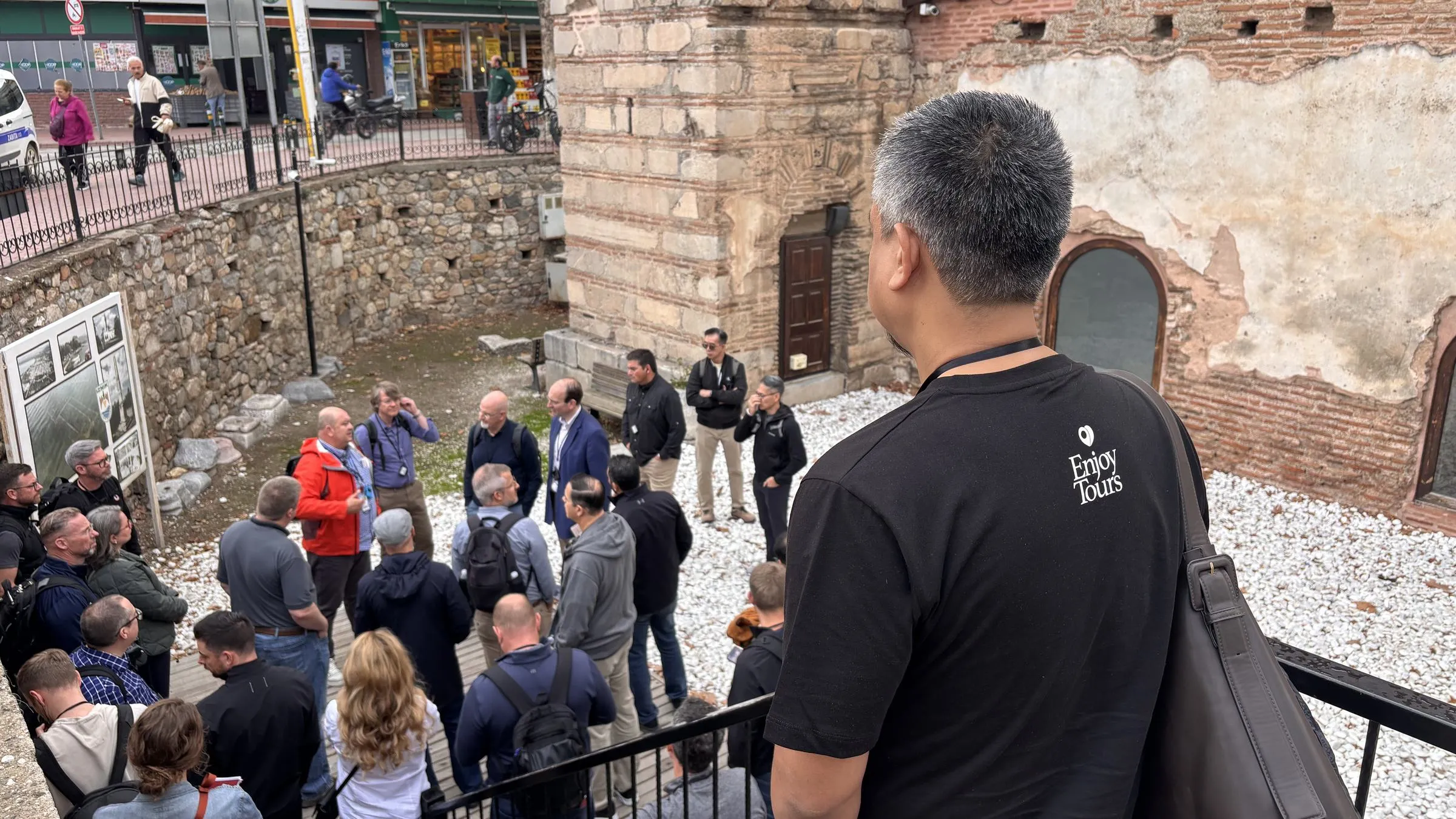
Albert Mohler, speaking in Istanbul, explains why it matters that the places of Scripture are real places on a map. This teaching insists there is no sacramental grace in pilgrimage, while showing how standing near Paul's Ephesus underlines that the Bible is space-time history, starting with Genesis 1:1.
Transcript
Albert Mohler (The Southern Baptist Theological Seminary), “The story of the Bible in space and time,” Field Notes, Enjoy Journal.
I’m standing in Istanbul, formerly Constantinople. It’s a real place. Wow, is it a real place. And I’m so glad to be here. So much of history comes together here.
But I have also been to Jerusalem. And it’s a wonderful thing as a Christian to be in Jerusalem. But I didn’t have to go there any more than I had to come here as a form of spiritual pilgrimage. It’s nonetheless just very reassuring that even though we don’t go on sacred pilgrimages and there’s no sacramental grace that comes by coming here or anywhere else, the reality is that when we’re looking to the scriptures, it is just wonderful for us to remember these are real places, space-time history continuum. They’re places that were on a map and you can still look on a map and see where they were.
You go to a place like Ephesus and of course it’s a ruin today and that’s a part of the story. That’s a parable in itself. But you could come extremely close to walking exactly where the Apostle Paul walked. Somewhere near here has to be the Hall of Tyrannus where he preached and taught. Here is exactly where Ephesus was. And you don’t have to go there for spiritual satisfaction. But wow, is it important to remember this is a real place.
And this is what sets the scriptures apart. We’re not talking about ancient mythopoetic literature. We’re talking about space-time continuum history. And by the way, I believe that starts with Genesis 1 verse 1 and then all the way through.
Keep going
More teaching